
 Business License

The Signal Hound PCR4200 Drops Packets and Produces Misaligned Inter-Channel Timestamps as Soon as All Four Channels Emit 40 MHz IQ Streams :supplier
Signal Hound PCR4200 four-channel phase coherent receiver supplier
The Signal Hound PCR4200 Drops Packets and Produces Misaligned Inter-Channel Timestamps as Soon as All Four Channels Emit 40 MHz IQ Streams — How Do You Do the Total-Bandwidth Math on the VITA-49 Data Plane?
Symptom
A single-channel 40 MHz IQ stream is stable and normal; occasional missing frames appear once two channels are enabled; with all four channels open the receiving side disconnects frequently, the parsed data has holes in the sequence numbers, and each channel's timestamps "run off on their own." A third party's in-house receiver program loses packets badly, while the official software demo works perfectly. Switching to a Gigabit port makes the whole thing collapse outright.
Root-Cause Analysis
The Signal Hound PCR4200 is defined by four-channel coherent I/Q streamed over 10GbE SFP+ using the VITA-49 protocol (40 MHz per channel). That creates one hard bandwidth bill (engineering estimate; the actual figure depends on the real word-width and format):
One channel at 40 Msym/s complex sampling with 16 bits for I and 16 for Q ≈ 160 MB/s;
Four channels together ≈ 640 MB/s, about 5.1 Gbps of pure payload; adding VITA-49 / UDP / IP / Ethernet overhead puts on-the-wire traffic close to 6 Gbps — 10GbE can carry it, but there is almost no headroom left for any other traffic.
VITA-49 runs over UDP with no retransmission: if any stage cannot keep up, it turns directly into sample holes, and the sequence-number field faithfully exposes which segment dropped them. Walk the failure points from link to host:
The link never actually reached 10G: if the SFP+ module, the fibre or the switch port falls back to 1G anywhere in the chain, a single channel limps along but multiple channels must collapse;
Default NIC settings don't suit bursty UDP: small receive buffers, RSS queues not allocated, jumbo frames not enabled end-to-end (mismatched MTU means fragmentation and heavy extra overhead);
Switch-path oversubscription: several hops in between, a shared uplink, or contention for buffers with other heavy traffic (video / backup) in the same VLAN;
Host consumer-side bottleneck: a single thread cannot keep up parsing a 640 MB/s stream, or the packet-receiving thread gets preempted by the scheduler, or blocking on disk writes pushes backpressure upstream;
Mixed timestamp semantics: the timestamp inside the VITA-49 packet (stamped on the device side) is not the same thing as the server's packet-arrival time — aligning channels using arrival time guarantees jitter.
Troubleshooting Steps
Staged loading to locate the bottleneck: enable streams 1 → 2 → 4 channels in turn while recording the server NIC RX-dropped counters and switch port drop/error counts. Whichever step makes a counter jump is where the bottleneck sits;
Confirm negotiation and end-to-end MTU: both ends of the link report 10 Gbps full duplex; jumbo frames are enabled consistently across NIC, switch and server;
Build quality metrics on VITA-49: have the receiver measure sequence-number continuity (packet loss rate) and per-channel timestamp alignment residual as quantified "link health" indicators instead of eyeballing;
Optimise the host side: bind a dedicated receive thread per channel to a core (local NUMA), enlarge UDP receive buffers, separate parsing from writing to disk. First run a "receive without writing" stress test to split network responsibility from storage responsibility (storage issues have their own article);
Isolate the traffic: run IQ data on a dedicated VLAN / physical port, completely separated from office traffic, video backhaul and backup.
Acceptance Criteria
Four channels streaming 40 MHz simultaneously for ≥30 minutes: sequence-number hole rate below the application budget, channel timestamp alignment residual stable; NIC and switch packet-loss counters show zero growth; restarting acquisition on any single channel reconnects and re-aligns automatically.
Sources: compiled from the Signal Hound PCR4200 product page (40 MHz per channel, 10GbE SFP+, VITA-49 streaming I/Q); bandwidth and traffic figures are engineering estimates derived from the sampling parameters.

Recently Posted
-
Signal Hound PCR4200 Built-in GPS: Multi-site Data Time Misalignment & Synchronization Limitations supplier
November 25, 2026Signal Hound four-channel phase coherent receiver supplierThe Signal Hound PCR4200 Has Built-in GPS, so Why Is Multi-Site Da Read More
-
Signal Hound PCR4200 4-Channel IQ Capture: Frame Drop After Minutes, Stop on Disk Full supplier
November 25, 2026Signal Hound PCR4200 four-channel phase coherent receiver supplierRecording IQ on All Four Signal Hound PCR4200 Channels Starts Dr Read More
-
Signal Hound PCR4200 supplier : Control Port Connected but IQ Stream Garbled — VITA-49 Integration Issue
November 23, 2026Signal Hound PCR4200 four-channel phase coherent receiver supplierThe Signal Hound PCR4200's Control Port Connects but the IQ Read More
-
Signal Hound PCR4200 supplier : 90-Min 4-Channel Consistency Acceptance Test for Delivery Inspection
November 23, 2026Signal Hound PCR4200 four-channel phase coherent receiver supplierHow Do You Accept a Fifty-Thousand-Dollar Signal Hound PCR4200 o Read More

Contact Us
Recommended Products
-
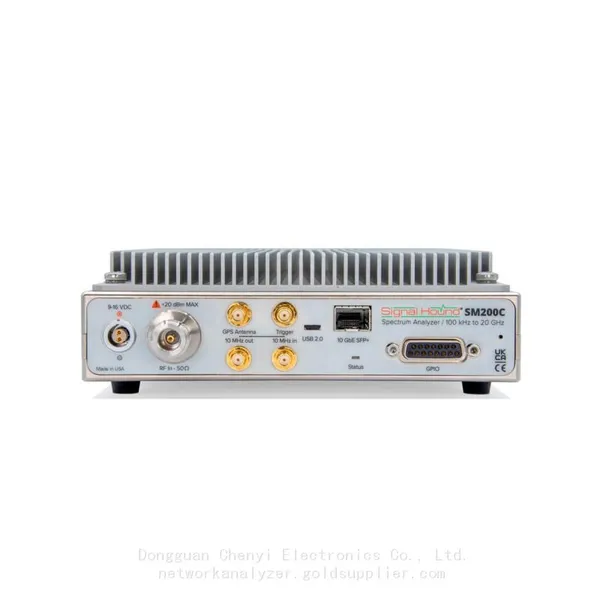
 Signal Hound SM200C 100 KHz to 20 GHz Real-time Spectrum Analyzer With 10GbE Monitoring ReceiversNegotiableMOQ: 1 Unit
-
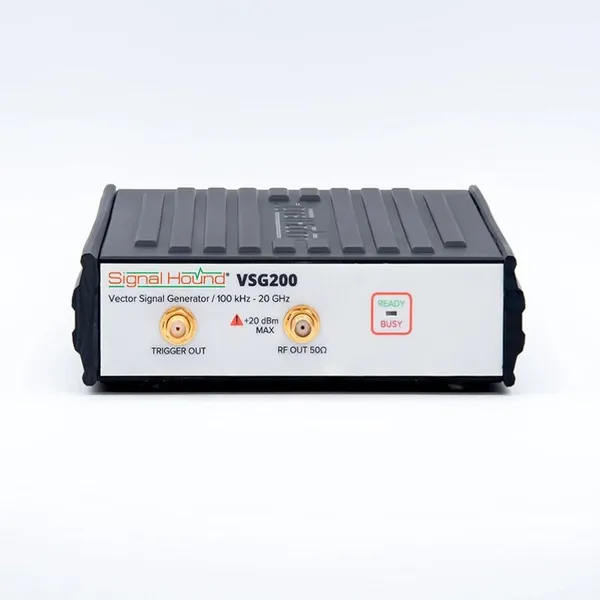
Signal Hound VSG200 Vector Signal Generator 100 KHz to 20 GHzNegotiableMOQ: 1 Unit
-
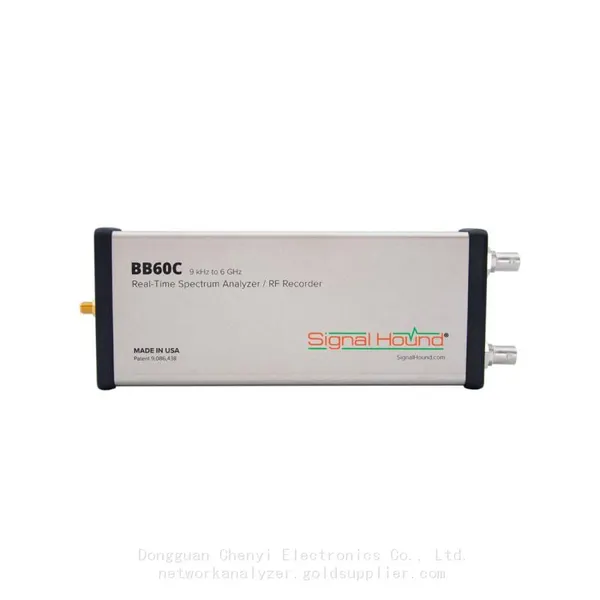
Signal Hound BB60C 9 KHz to 6 GHz Real-time Spectrum AnalyzerNegotiableMOQ: 1 Unit
-
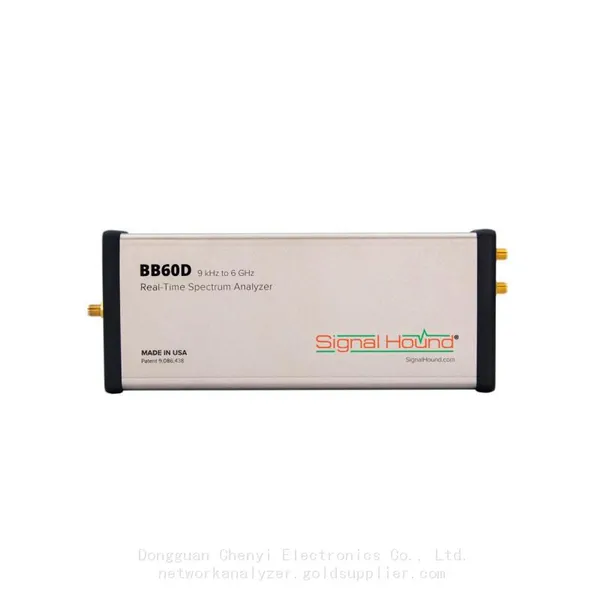
Signal Hound BB60D 9 KHz to 6 GHz Real-time Spectrum AnalyzerNegotiableMOQ: 1 Unit
-
Signal Hound SP145 100 KHz to 14.5 GHz Real-time Spectrum Analyzer Monitoring ReceiversNegotiableMOQ: 1 Unit
-
Signal Hound VSG60A 50 MHz to 6 GHz GHz Vector Signal GeneratorNegotiableMOQ: 1 Unit
-
Signal Hound VSG25A 100 MHz to 2.5 GHz Vector Signal GeneratorNegotiableMOQ: 1 Unit
-
Signal Hound VNA400 40 MHz to 40 GHz 2-port Vector Network AnalyzerNegotiableMOQ: 1 Unit
-
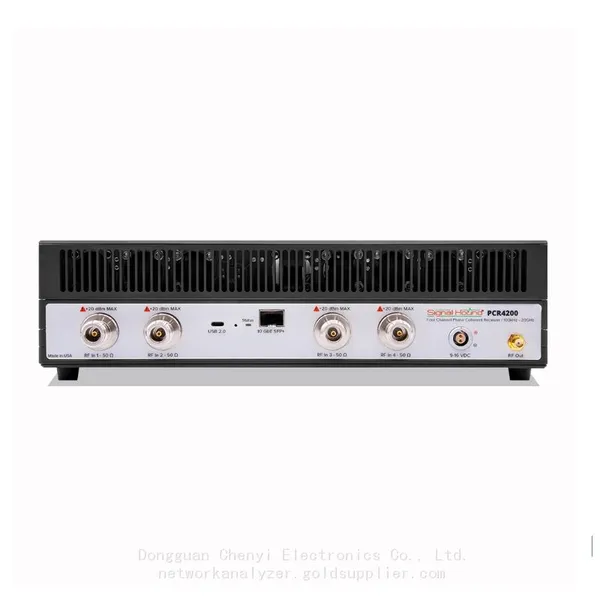
Signal Hound PCR4200 100 KHz to 20 GHz Four-Channel Phase Coherent ReceiverNegotiableMOQ: 1 Unit
-
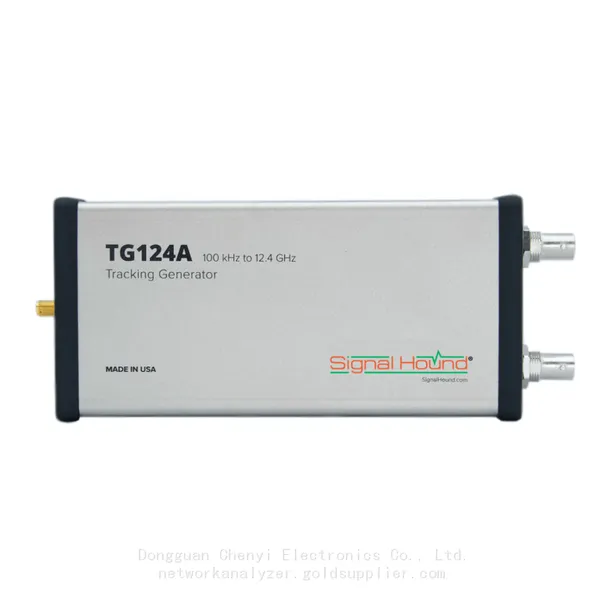
Signal Hound TG124A 100 KHz to 12.4 GHz Tracking GeneratorNegotiableMOQ: 1 Unit
-
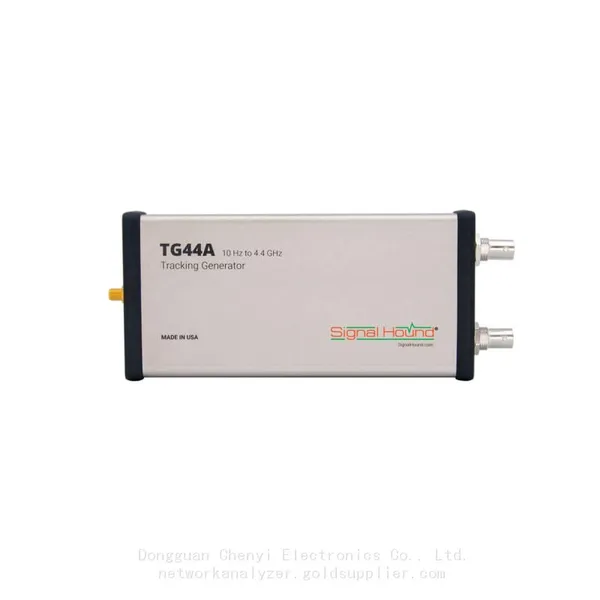
Signal Hound TG44A 10 Hz to 4.4 GHz t Tracking GeneratorNegotiableMOQ: 1 Unit
-
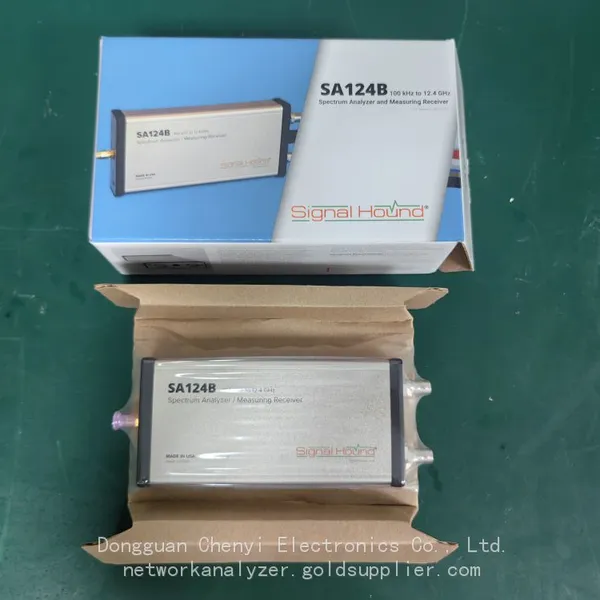
Signal Hound SA124B 100 KHz to 12.4 GHz Spectrum AnalyzerNegotiableMOQ: 1 Unit
-
Signal Hound SA44B 1 Hz to 4.4 GHz Spectrum AnalyzerNegotiableMOQ: 1 Unit
-
SM200B Real‑time Spectrum Analyzer,USB3.0 RTSA,100kHz-20GHz,calibrated I/Q Capture for 5G Test & Interference HuntingNegotiableMOQ: 1 Unit
-
Signal Hound SM435C 100 KHz to 43.5GHz Real-time Spectrum Analyzer With 10GbE Monitoring ReceiversNegotiableMOQ: 1 Unit
-
Signal Hound SM435B 100 KHz to 43.5GHz Real-time Spectrum Analyzer Monitoring ReceiversNegotiableMOQ: 1 Unit
-
Signal Hound PN400 Phase Noise and VCO Test System 100 KHz to 43.5 GHzNegotiableMOQ: 1 Unit
-
Keysight E4980A Precision LCR Meter 20 Hz to 2 MHzNegotiableMOQ: 1 Unit
-
Keysight E4980B and E4980BL Precision LCR Meter 20 Hz to 2 MHzNegotiableMOQ: 1 Unit
-
Keysight U1733C Handheld LCR Meter 100Hz 120Hz 1kHz 10kHz 100kHzNegotiableMOQ: 1 Unit