
 Business License

Signal Hound PCR4200 supplier : 90-Min 4-Channel Consistency Acceptance Test for Delivery Inspection
Signal Hound PCR4200 four-channel phase coherent receiver supplier
How Do You Accept a Fifty-Thousand-Dollar Signal Hound PCR4200 on Delivery? A 90-Minute Four-Channel Consistency Test That Stops "Out-of-the-Gate Losses" Before You Sign
Symptom
A high-value instrument arrives. Logistics shocks, a previous owner (if applicable) and long-haul temperature swings can all leave hidden damage. The routine unboxing procedure — "it powers on and sweeps, so sign for it" — means that a week later, when array work starts, you discover: one channel is 5 dB worse in sensitivity, phase consistency doesn't match the marketing claims, X-band noise figure sits far above specification. By then, arguing responsibility involves logistics, factory inspection and the user pointing at each other, and the return window has usually closed.
Root-Cause Analysis
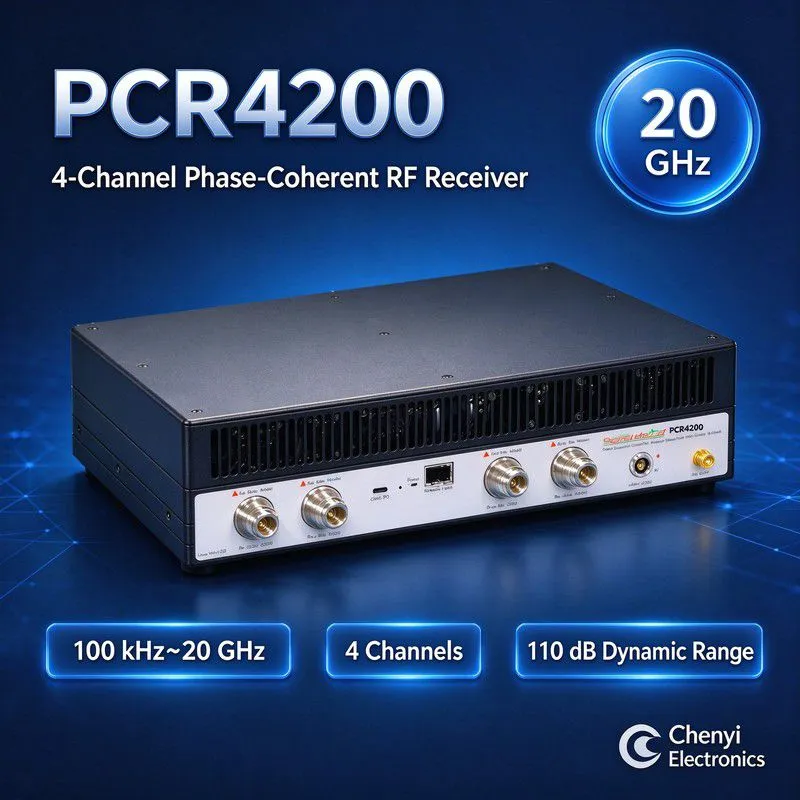
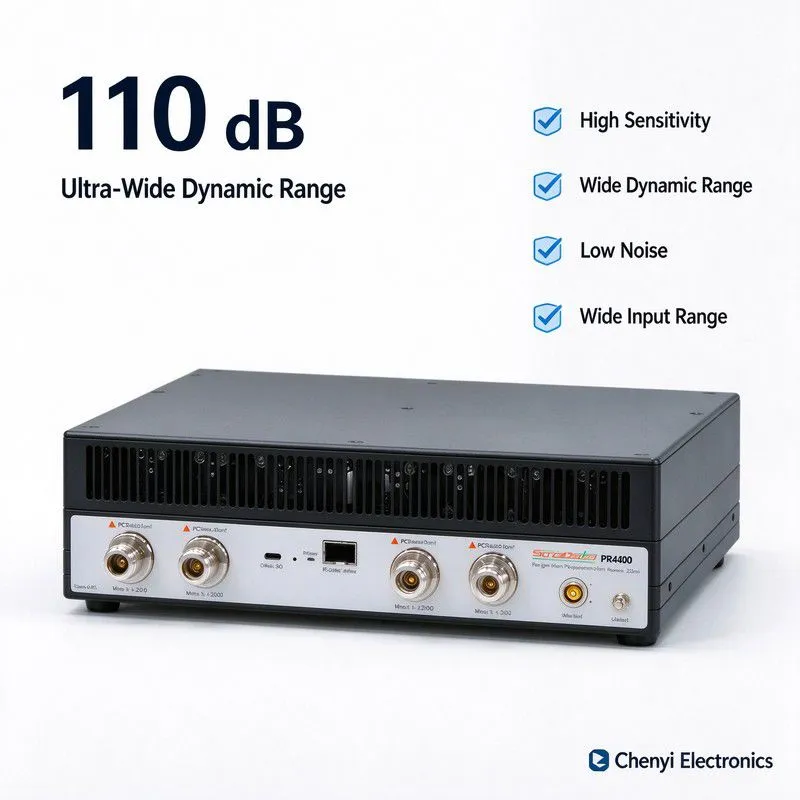
The Signal Hound PCR4200's value concentrates in four-channel consistency (coherent capability, 40 MHz per channel, typical X-band noise figure of 7–9 dB, −136 dBc/Hz at 10 kHz offset / 1 GHz carrier phase noise, built-in VSG and GPS), so acceptance must quantify every item. Nothing that "looks fine sweeping on screen" counts. Risk items ordered by likelihood of damage: ① transport-induced mechanical or internal-connection degradation at the ports (a single channel reading low first shows up here); ② an undetected unit-to-unit front-end difference on one channel; ③ software / firmware version or licensed configuration not matching the order (channel count, options); ④ coherent mode never actually tested, while independent tuning "seems to work everywhere."
The 90-Minute Acceptance Procedure (prepare: a signal source plus a power splitter with four matched-length cables, or the built-in VSG method, plus a torque wrench)
Stage 1: Appearance and Configuration (10 minutes)
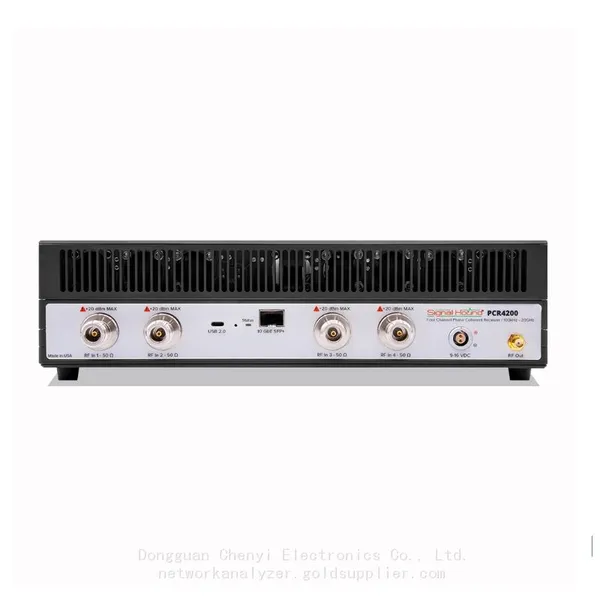
Verify serial numbers against the packing list; inspect all four RF input pins for flushness and damage (bright light plus magnifier); check the SFP+ cages for foreign matter;
Power on and read firmware / software versions; confirm licences match the ordered configuration (channel count, built-in VSG, GPS); run the official self-test.
Stage 2: Four-Channel Consistency (40 minutes, the core)
Amplitude: via an external source through four matched-length cables / a power splitter, inject −30 dBm at four points — 1 GHz, 5 GHz, 10 GHz and 18 GHz — using the attenuation step actually used in operation, and read each channel's power-meter function value. Record and archive pairwise differences ≤1 dB;
Phase: in coherent mode with the same input signal, record pairwise IQ phase differences across the four channels and repeat three times to observe stability (for drift trends see the warm-up article: warm up before judging);
Without an external source, the built-in VSG loop-back method can serve as a relative-consistency pre-screen (mind the reference-plane difference — see the calibration article), but an external source is still recommended for the key criteria;
If any channel reads systematically low / high or shows a phase shift, annotate the frequency point and band position on the spot and keep screenshots.
Stage 3: Sensitivity and Noise (20 minutes)
Terminate the ports with 50 Ω loads and record each channel's full-band noise-floor trace; at 2 GHz and at an X-band point derive equivalent noise figure from the noise floor and compare against specification (typical X-band 7–9 dB). Degradation of ≥3 dB on a single channel is an abnormality signal;
Look for obvious anomalous spurs / comb lines and compare them against the manual's spur specifications.
Stage 4: Data Plane and Functions (20 minutes)
Run all four channels' 40 MHz IQ streams concurrently for ≥15 minutes: no holes in sequence numbers, timestamps aligned (the integration checklist has its own article);
Point-verify each function: single-channel sweep mode, independent tuning, built-in VSG transmission, GPS discipline;
Consolidate all results into an acceptance report. For any anomaly, photograph plus screenshot plus immediate feedback to the seller, and hold off signing — for high-value instruments the claim window runs from delivery.
Recommendations
On the shipping side, dealers should include per-unit "factory four-channel consistency data" in the crate, moving disputes upstream and eliminating them there. Choose insured wooden crating for logistics and complete this procedure within 48 hours of arrival. Re-run Stage 2 after the instrument is moved or a part is replaced, as a simplified annual check.
Sources: compiled from Signal Hound PCR4200 product specifications (four channels, 40 MHz VITA-49 per channel, built-in preselector / VSG / GPS, typical X-band noise figure 7–9 dB, ultra-low phase noise) and general practice for receiving high-value instruments on delivery.
WhatsApp:+85268839563
Recently Posted
-
Signal Hound PCR4200 supplier : Control Port Connected but IQ Stream Garbled — VITA-49 Integration Issue
November 23, 2026Signal Hound PCR4200 four-channel phase coherent receiver supplierThe Signal Hound PCR4200's Control Port Connects but the IQ Read More
-
Signal Hound PCR4200 supplier: Two Ports Damaged by Lightning + Hot-Plug with Antenna Array
November 23, 2026Signal Hound PCR4200 four-channel phase coherent receiver supplierThe Signal Hound PCR4200's Four Channels Were Hooked to an A Read More
-
Signal Hound PCR4200 supplier : Spectrum Abnormally Clean or False Peaks from 45 MHz–20 GHz Sub-Octave Preselector
November 23, 2026Signal Hound PCR4200 four-channel phase coherent receiver supplierThe Signal Hound PCR4200 Spectrum Is "Unusually Clean" Read More
-
Signal Hound PCR4200: Coherent Accuracy Lost & Resource Contention Error When Four Channels Set to Different Frequencies supplier
November 23, 2026Signal Hound PCR4200 four-channel phase coherent receiver supplierAfter Setting the Four Signal Hound PCR4200 Channels to Four Dif Read More

Contact Us
Recommended Products
-
 Signal Hound SM200C 100 KHz to 20 GHz Real-time Spectrum Analyzer With 10GbE Monitoring ReceiversNegotiableMOQ: 1 Unit
-
Signal Hound VSG200 Vector Signal Generator 100 KHz to 20 GHzNegotiableMOQ: 1 Unit
-
Signal Hound BB60C 9 KHz to 6 GHz Real-time Spectrum AnalyzerNegotiableMOQ: 1 Unit
-
Signal Hound BB60D 9 KHz to 6 GHz Real-time Spectrum AnalyzerNegotiableMOQ: 1 Unit
-
Signal Hound SP145 100 KHz to 14.5 GHz Real-time Spectrum Analyzer Monitoring ReceiversNegotiableMOQ: 1 Unit
-
Signal Hound VSG60A 50 MHz to 6 GHz GHz Vector Signal GeneratorNegotiableMOQ: 1 Unit
-
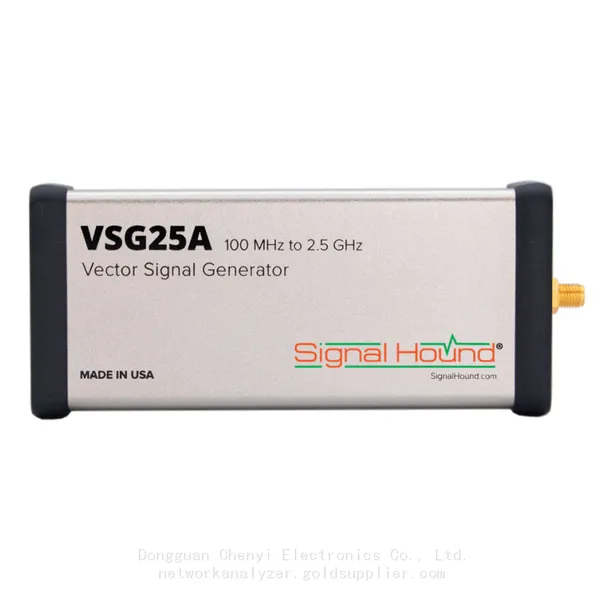
Signal Hound VSG25A 100 MHz to 2.5 GHz Vector Signal GeneratorNegotiableMOQ: 1 Unit
-
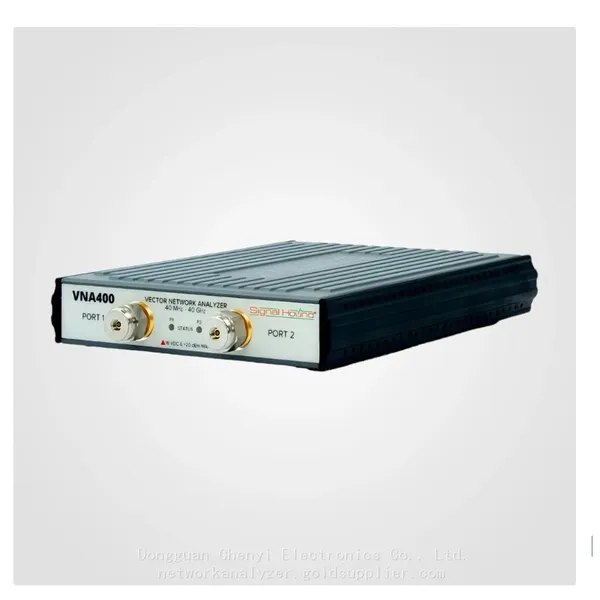
Signal Hound VNA400 40 MHz to 40 GHz 2-port Vector Network AnalyzerNegotiableMOQ: 1 Unit
-
Signal Hound PCR4200 100 KHz to 20 GHz Four-Channel Phase Coherent ReceiverNegotiableMOQ: 1 Unit
-
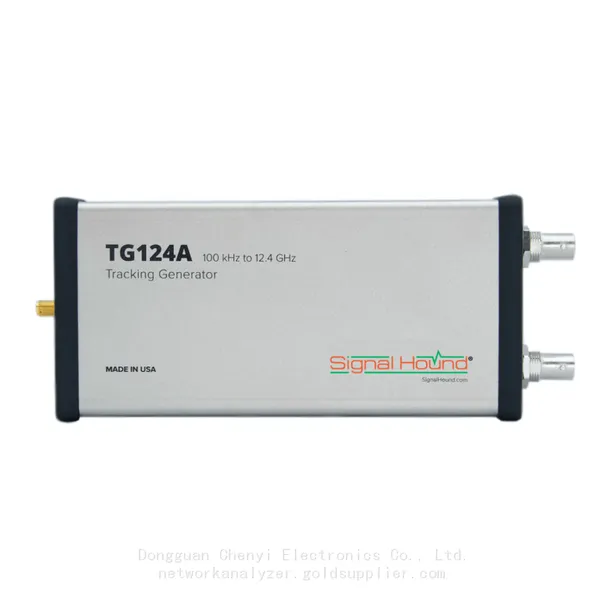
Signal Hound TG124A 100 KHz to 12.4 GHz Tracking GeneratorNegotiableMOQ: 1 Unit
-
Signal Hound TG44A 10 Hz to 4.4 GHz t Tracking GeneratorNegotiableMOQ: 1 Unit
-
Signal Hound SA124B 100 KHz to 12.4 GHz Spectrum AnalyzerNegotiableMOQ: 1 Unit
-
Signal Hound SA44B 1 Hz to 4.4 GHz Spectrum AnalyzerNegotiableMOQ: 1 Unit
-
SM200B Real‑time Spectrum Analyzer,USB3.0 RTSA,100kHz-20GHz,calibrated I/Q Capture for 5G Test & Interference HuntingNegotiableMOQ: 1 Unit
-
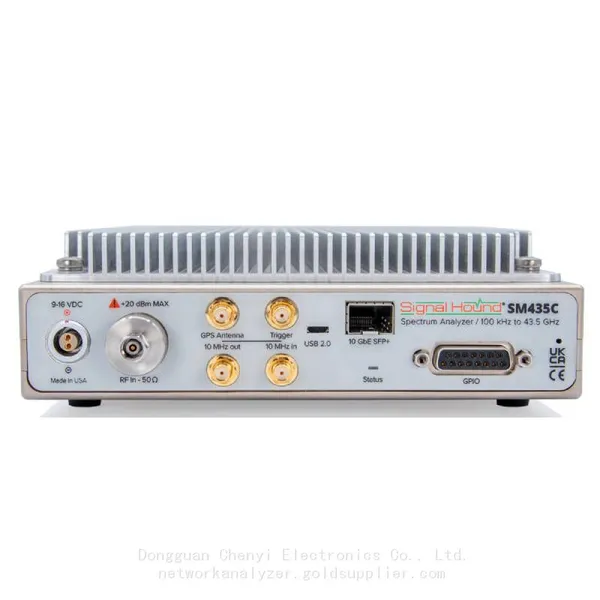
Signal Hound SM435C 100 KHz to 43.5GHz Real-time Spectrum Analyzer With 10GbE Monitoring ReceiversNegotiableMOQ: 1 Unit
-
Signal Hound SM435B 100 KHz to 43.5GHz Real-time Spectrum Analyzer Monitoring ReceiversNegotiableMOQ: 1 Unit
-
Signal Hound PN400 Phase Noise and VCO Test System 100 KHz to 43.5 GHzNegotiableMOQ: 1 Unit
-
Keysight E4980A Precision LCR Meter 20 Hz to 2 MHzNegotiableMOQ: 1 Unit
-
Keysight E4980B and E4980BL Precision LCR Meter 20 Hz to 2 MHzNegotiableMOQ: 1 Unit
-
Keysight U1733C Handheld LCR Meter 100Hz 120Hz 1kHz 10kHz 100kHzNegotiableMOQ: 1 Unit