
 Business License

Signal Hound PCR4200: Coherent Accuracy Lost & Resource Contention Error When Four Channels Set to Different Frequencies supplier
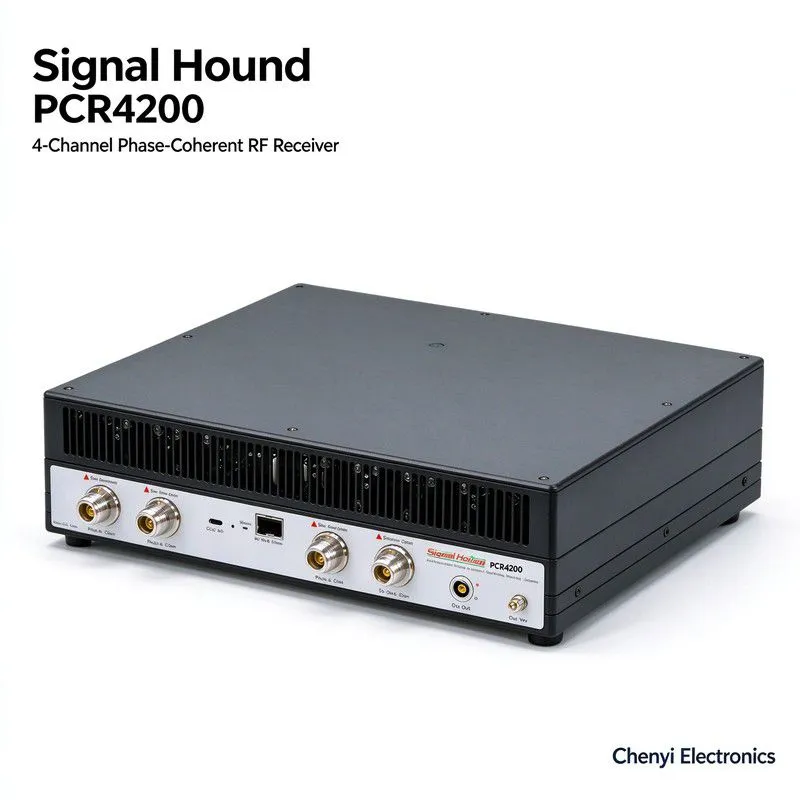
Signal Hound PCR4200 four-channel phase coherent receiver supplier
After Setting the Four Signal Hound PCR4200 Channels to Four Different Frequencies, Coherent Accuracy Disappears and Some Channels Throw "Resource Contention" Errors — the Two Modes Cannot Be Mixed in Your Head
Symptom
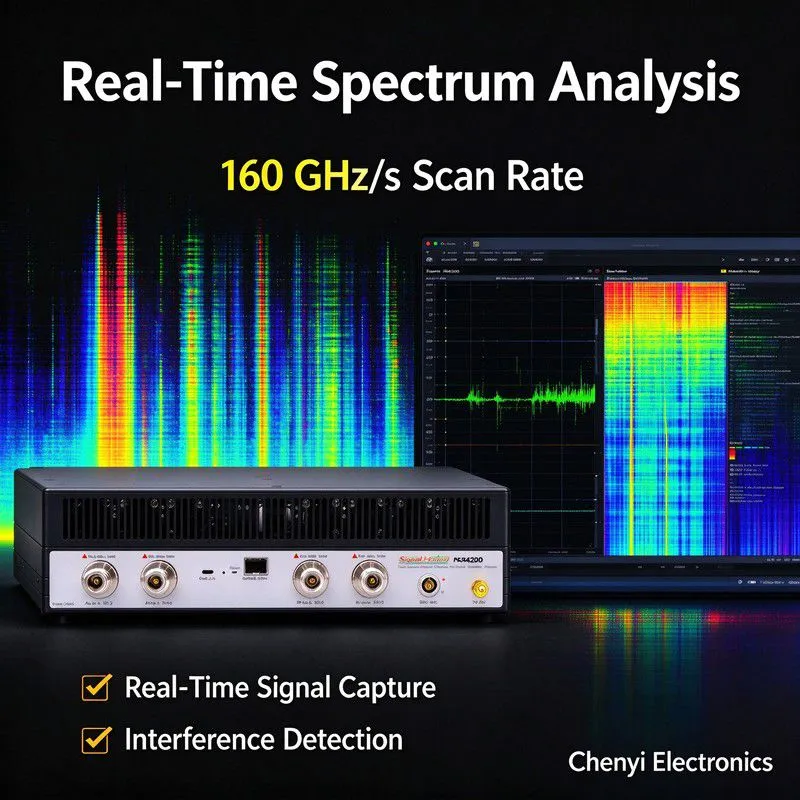
A user is attracted by the Signal Hound PCR4200's "each channel independently tunable" capability and sets four channels to four different frequency points for simultaneous acquisition. Then: ① the inter-channel phase calibration done earlier becomes completely invalid; ② under some configuration combinations the software reports a mode conflict / resource error, or a channel's parameters are "automatically rolled back"; ③ someone tries to have channel 1 run spectrum sweep (sweep mode up to 160 GHz/s) while channels 2–4 emit coherent IQ, and the two tasks interfere with each other so that neither set of data is correct.
Root-Cause Analysis
The essence of the Signal Hound PCR4200 architecture is a dual regime of "shared high-performance LO plus channel-specific LO" (two modes per channel: coherent operation or independent tuning; any single channel can additionally be configured for spectrum-sweep mode up to 160 GHz/s). This is both a capability and a constraint:
Independent tuning = giving up phase coherency for that group of channels: channel-specific LOs each go their own way and the phase difference drifts with each LO. Doing interferometry or direction finding in independent-tuning mode does not hold in principle. Mode selection must be driven by "does this data need to be coherent" — there is no fourth state that gives you "four frequency points and four coherent channels at once";
Shared resources have allocation constraints: sweep-mode tuning speed, IQ output bandwidth and channel count share the digital chain and data-plane resources. A combination like "one channel sweeping furiously + three channels at full-bandwidth IQ" may exceed the internal scheduling budget, showing up as parameters being rolled back or degraded stream quality. The official software / manual defines the supported combination matrix for each mode — follow the shipped documentation;
A mode switch is a recalibration boundary: switching from coherent to independent and back means the previously calibrated inter-channel amplitude and phase relationship no longer holds automatically (at minimum, re-verify quickly with the built-in VSG);
Not modelled at the application layer: production software assumes "all channels in the same mode" by default; an experiment changes one channel's mode manually and forgets to change it back, and the data is silently processed under a wrong assumption — the most insidious category.
Correct Configuration and Troubleshooting
Classify the task first, then assign channels: the coherent group (direction finding / beamforming / coherent MIMO acquisition) locks into coherent mode as a whole and gets its own dedicated configuration file; wideband surveying and multi-frequency monitoring use independent-tuning mode. Keep the two job templates physically separate and never allow mixing;
Read-back verification: before acquisition starts, the script reads back "operating mode + centre frequency + bandwidth + preselector/attenuation" per channel and diffs it against the template; on mismatch it refuses to start and raises an alarm. This eliminates "forgot to change it back" incidents before the test begins;
Check the matrix for combined capability: when you need combinations such as "sweep + IQ running together," first validate that combination against the shipped manual / official software support notes (usable channel count, bandwidth ceiling, priority), then write it into the procedure. Do not rely long-term on combinations the manual doesn't promise as if they were "hidden features";
Manage performance expectations: the 160 GHz/s figure for single-channel sweep mode is a sweep-speed selling point, and it is a different use case from four-channel 40 MHz coherent IQ. Explain this clearly when matching a model to a use case during presales, to avoid the mismatch of "buying a coherent receiver just to use it as a fast spectrum analyser."
Acceptance Criteria
Configuration files lock the mode and read-back verification runs automatically before start-up; coherent-group data is fully explainable end to end, and independently tuned groups are never used for coherent processing; batches anomalous due to mixed modes are reduced to zero.
Sources: compiled from Signal Hound PCR4200 product material (per-channel coherent / independent-tuning dual modes, single channel configurable for spectrum sweep up to 160 GHz/s, shared-LO architecture); supported mode combinations follow the shipped manual.
Recently Posted
-
Signal Hound PCR4200 supplier : Control Port Connected but IQ Stream Garbled — VITA-49 Integration Issue
November 23, 2026Signal Hound PCR4200 four-channel phase coherent receiver supplierThe Signal Hound PCR4200's Control Port Connects but the IQ Read More
-
Signal Hound PCR4200 supplier : 90-Min 4-Channel Consistency Acceptance Test for Delivery Inspection
November 23, 2026Signal Hound PCR4200 four-channel phase coherent receiver supplierHow Do You Accept a Fifty-Thousand-Dollar Signal Hound PCR4200 o Read More
-
Signal Hound PCR4200 supplier: Two Ports Damaged by Lightning + Hot-Plug with Antenna Array
November 23, 2026Signal Hound PCR4200 four-channel phase coherent receiver supplierThe Signal Hound PCR4200's Four Channels Were Hooked to an A Read More
-
Signal Hound PCR4200 supplier : Spectrum Abnormally Clean or False Peaks from 45 MHz–20 GHz Sub-Octave Preselector
November 23, 2026Signal Hound PCR4200 four-channel phase coherent receiver supplierThe Signal Hound PCR4200 Spectrum Is "Unusually Clean"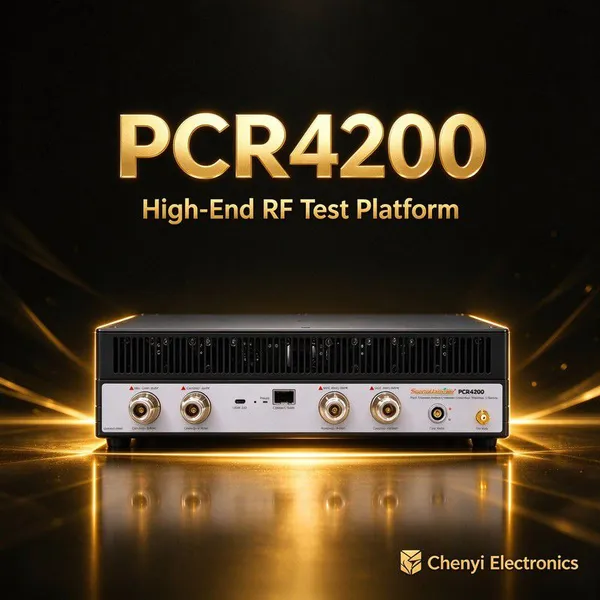 Read More

Contact Us
Recommended Products
-
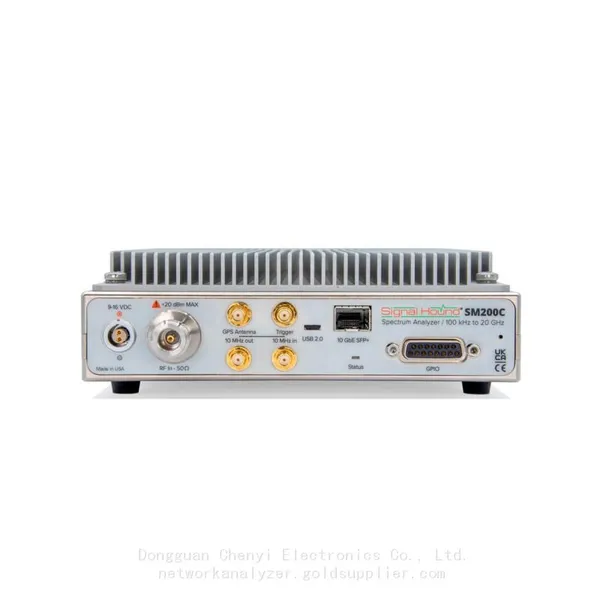
 Signal Hound SM200C 100 KHz to 20 GHz Real-time Spectrum Analyzer With 10GbE Monitoring ReceiversNegotiableMOQ: 1 Unit
-
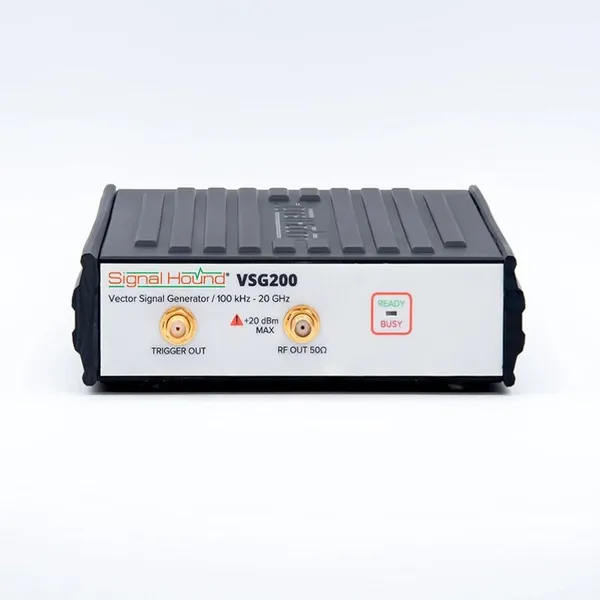
Signal Hound VSG200 Vector Signal Generator 100 KHz to 20 GHzNegotiableMOQ: 1 Unit
-
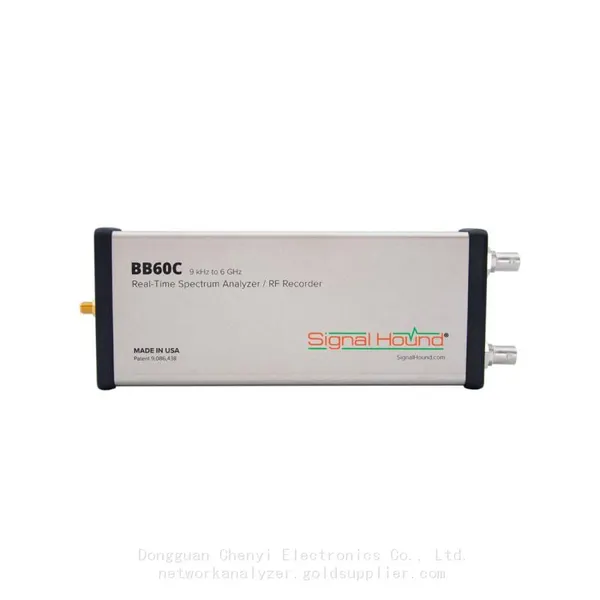
Signal Hound BB60C 9 KHz to 6 GHz Real-time Spectrum AnalyzerNegotiableMOQ: 1 Unit
-
Signal Hound BB60D 9 KHz to 6 GHz Real-time Spectrum AnalyzerNegotiableMOQ: 1 Unit
-
Signal Hound SP145 100 KHz to 14.5 GHz Real-time Spectrum Analyzer Monitoring ReceiversNegotiableMOQ: 1 Unit
-
Signal Hound VSG60A 50 MHz to 6 GHz GHz Vector Signal GeneratorNegotiableMOQ: 1 Unit
-
Signal Hound VSG25A 100 MHz to 2.5 GHz Vector Signal GeneratorNegotiableMOQ: 1 Unit
-
Signal Hound VNA400 40 MHz to 40 GHz 2-port Vector Network AnalyzerNegotiableMOQ: 1 Unit
-
Signal Hound PCR4200 100 KHz to 20 GHz Four-Channel Phase Coherent ReceiverNegotiableMOQ: 1 Unit
-
Signal Hound TG124A 100 KHz to 12.4 GHz Tracking GeneratorNegotiableMOQ: 1 Unit
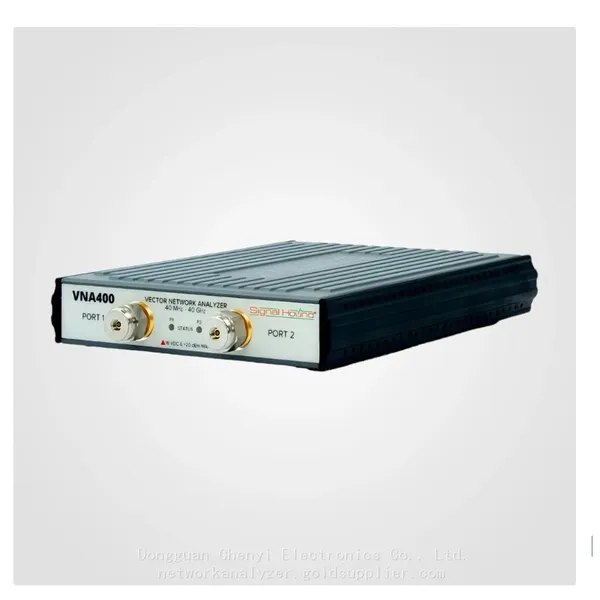
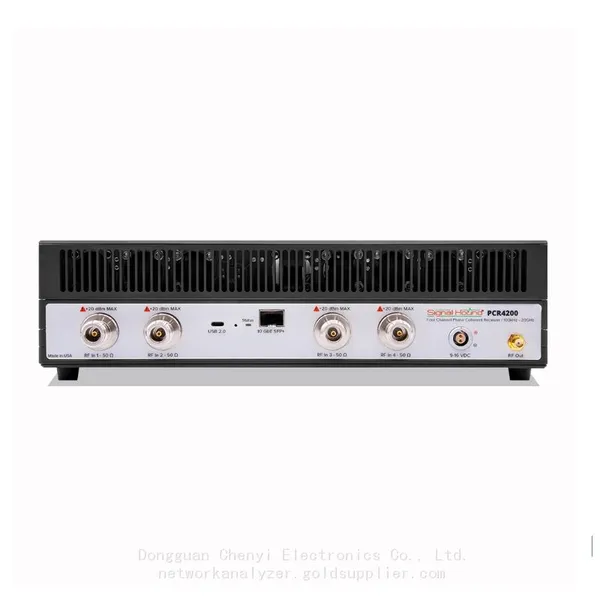
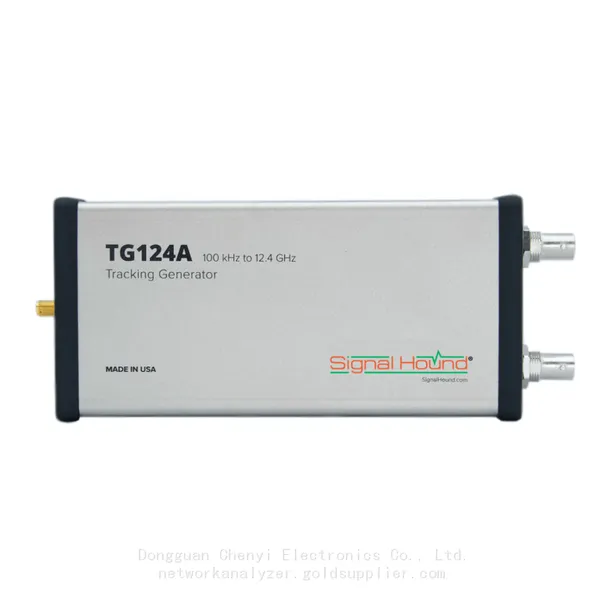
-
Signal Hound TG44A 10 Hz to 4.4 GHz t Tracking GeneratorNegotiableMOQ: 1 Unit
-
Signal Hound SA124B 100 KHz to 12.4 GHz Spectrum AnalyzerNegotiableMOQ: 1 Unit
-
Signal Hound SA44B 1 Hz to 4.4 GHz Spectrum AnalyzerNegotiableMOQ: 1 Unit
-
SM200B Real‑time Spectrum Analyzer,USB3.0 RTSA,100kHz-20GHz,calibrated I/Q Capture for 5G Test & Interference HuntingNegotiableMOQ: 1 Unit
-
Signal Hound SM435C 100 KHz to 43.5GHz Real-time Spectrum Analyzer With 10GbE Monitoring ReceiversNegotiableMOQ: 1 Unit
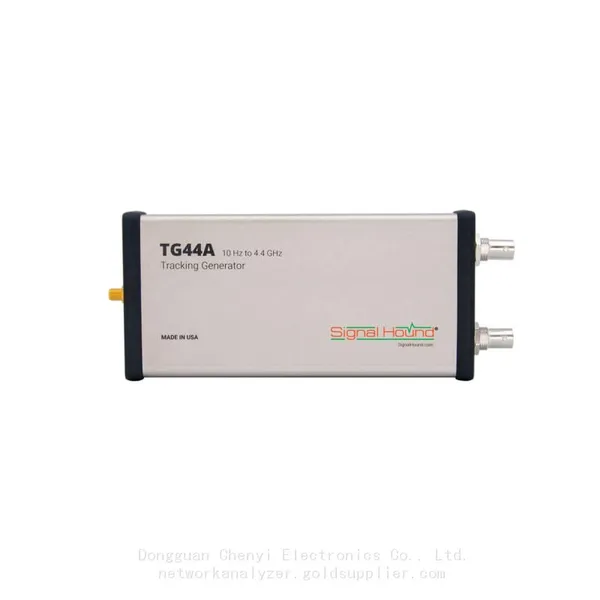
-
Signal Hound SM435B 100 KHz to 43.5GHz Real-time Spectrum Analyzer Monitoring ReceiversNegotiableMOQ: 1 Unit
-
Signal Hound PN400 Phase Noise and VCO Test System 100 KHz to 43.5 GHzNegotiableMOQ: 1 Unit
-
Keysight E4980A Precision LCR Meter 20 Hz to 2 MHzNegotiableMOQ: 1 Unit
-
Keysight E4980B and E4980BL Precision LCR Meter 20 Hz to 2 MHzNegotiableMOQ: 1 Unit
-
Keysight U1733C Handheld LCR Meter 100Hz 120Hz 1kHz 10kHz 100kHzNegotiableMOQ: 1 Unit