
 Business License

Signal Hound PCR4200 supplier : Control Port Connected but IQ Stream Garbled — VITA-49 Integration Issue
Signal Hound PCR4200 four-channel phase coherent receiver supplier
The Signal Hound PCR4200's Control Port Connects but the IQ Stream Parses as a Mess of Garbage — A VITA-49 Data-Plane Integration Checklist for Second-Party Development
Symptom
An integrator connects the Signal Hound PCR4200 to an in-house monitoring platform. The official manual says SCPI automation and VITA-49 data streaming are supported, and all control commands (frequency and gain queries and settings) work. But the IQ data comes back as garbage when parsed: frame boundaries cannot be found, I/Q values are absurd, and the four channels' data are tangled together. Someone applies the byte order used for spectrum-analyser IQ files straight onto VITA-49, and every edit makes it worse.
Root-Cause Analysis
Software integration on the Signal Hound PCR4200 means two independent paths, and many teams have only ever built one of them; conflating them is how projects derail:
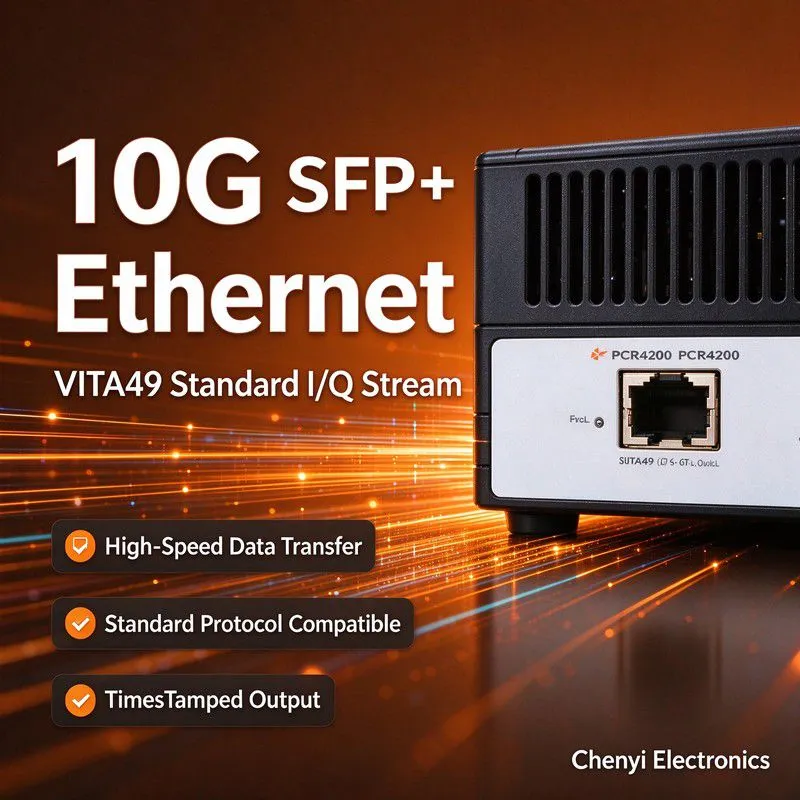
Control plane and data plane are separate: control (configuration / status) runs over a SCPI / SDK session (IP network); IQ data runs over VITA-49-formatted UDP streams (on the 10GbE port). The two may differ in port, destination address, and even physical network interface. "Control works" and "the data plane is configured" are two separate milestones, each needing its own acceptance;
VITA-49 is not raw IQ: each packet carries an RTP header (packet format, data format ID, channel ID) plus user fields (timestamp, stream number, etc.). Inside the payload, the I/Q interleaving order, word length / fixed-point format, and complex packing scheme must all be parsed according to the instrument's data-format definition. Reading it with an "assumed format" inevitably yields garbage;
Multi-channel interleaving versus separation: the four channel streams may each occupy their own UDP port / destination address, or be merged into one path distinguished by channel ID. Mixing packets or missing a filter produces "all four channels tangled together";
Address and port configuration mismatch: the device-side stream destination IP / port doesn't match what the receiver listens on. This shows up as "control fine, zero bytes on the data plane" — you hit it even before the garbage stage;
Official resources underused: the PCR4200 ships an API (the official online API documentation covers phase warm-up among other things), plus manuals and examples on the download page. SDK sample code is the first reference; reverse-engineering protocol fields is the last resort.
Integration Checklist
Read both documents before writing code: the product manual's networking / stream configuration chapters (control address, stream ports, data-format definitions) plus the VITA-49 field table. Transcribe I/Q word length, interleaving, sign convention and timestamp format into struct comments;
Capture packets to verify the format: use Wireshark on the 10G data-plane port (or a mirrored copy) and check that the byte layout of every packet matches the documented definition. Nine times in ten, garbage means a struct field was guessed wrong;
Verify step by step: ① control plane — every command reads back identically; ② data plane — receive packets without parsing at all first, and confirm packet rate and length match the theoretical value for "40 MHz per channel"; ③ parse one channel; ④ then all four; ⑤ finally wire it into the application (spectrum / recording / direction finding);
Treat sequence numbers and timestamps as health metrics: compute packet loss rate and per-channel timestamp alignment residual in real time and push them to monitoring, so data quality is quantifiable and faults are attributable;
Performance engineering: bind receive threads to cores with large buffers, SIMD for parsing, asynchronous writes to disk — the real-time budget for 40 M × 4 is adequate on x86 but leaves no room for waste;
Record the integration environment: SDK version, firmware version, operating system and NIC model go into the integration baseline; check release notes before any upgrade.
Acceptance Criteria
Parsed samples across all four streams show continuous counts consistent with the configured sample rate; full read-back verification passes for all control and status commands; data-quality metrics (packet loss, timestamp residual) appear on the platform dashboard; the integration baseline document is delivered.
Sources: compiled from Signal Hound PCR4200 product material (VITA-49 streaming I/Q, SCPI automation), the official PCR API online documentation, and the manuals provided on the download page.
WhatsApp:+85268839563
Recently Posted
-
Signal Hound PCR4200 supplier : 90-Min 4-Channel Consistency Acceptance Test for Delivery Inspection
November 23, 2026Signal Hound PCR4200 four-channel phase coherent receiver supplierHow Do You Accept a Fifty-Thousand-Dollar Signal Hound PCR4200 o Read More
-
Signal Hound PCR4200 supplier: Two Ports Damaged by Lightning + Hot-Plug with Antenna Array
November 23, 2026Signal Hound PCR4200 four-channel phase coherent receiver supplierThe Signal Hound PCR4200's Four Channels Were Hooked to an A Read More
-
Signal Hound PCR4200 supplier : Spectrum Abnormally Clean or False Peaks from 45 MHz–20 GHz Sub-Octave Preselector
November 23, 2026Signal Hound PCR4200 four-channel phase coherent receiver supplierThe Signal Hound PCR4200 Spectrum Is "Unusually Clean"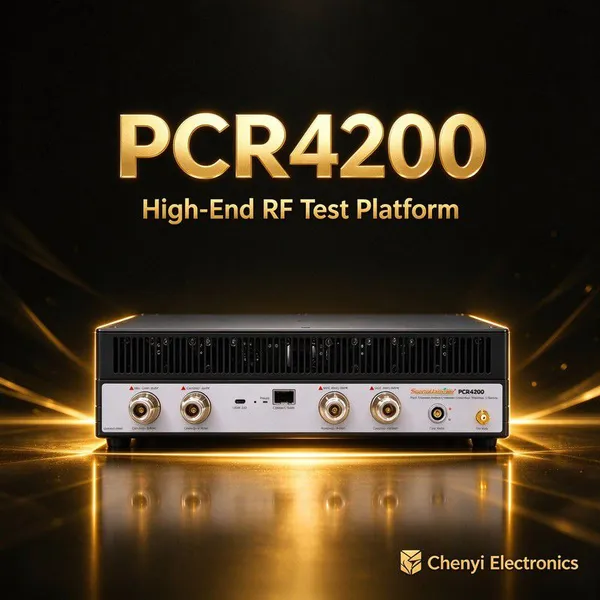 Read More
-
Signal Hound PCR4200: Coherent Accuracy Lost & Resource Contention Error When Four Channels Set to Different Frequencies supplier
November 23, 2026Signal Hound PCR4200 four-channel phase coherent receiver supplierAfter Setting the Four Signal Hound PCR4200 Channels to Four Dif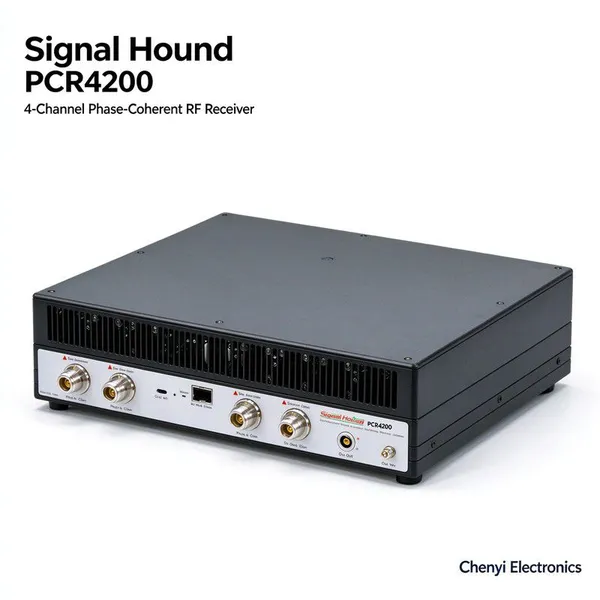 Read More

Contact Us
Recommended Products
-
 Signal Hound SM200C 100 KHz to 20 GHz Real-time Spectrum Analyzer With 10GbE Monitoring ReceiversNegotiableMOQ: 1 Unit
-
Signal Hound VSG200 Vector Signal Generator 100 KHz to 20 GHzNegotiableMOQ: 1 Unit
-
Signal Hound BB60C 9 KHz to 6 GHz Real-time Spectrum AnalyzerNegotiableMOQ: 1 Unit
-
Signal Hound BB60D 9 KHz to 6 GHz Real-time Spectrum AnalyzerNegotiableMOQ: 1 Unit
-
Signal Hound SP145 100 KHz to 14.5 GHz Real-time Spectrum Analyzer Monitoring ReceiversNegotiableMOQ: 1 Unit
-
Signal Hound VSG60A 50 MHz to 6 GHz GHz Vector Signal GeneratorNegotiableMOQ: 1 Unit
-
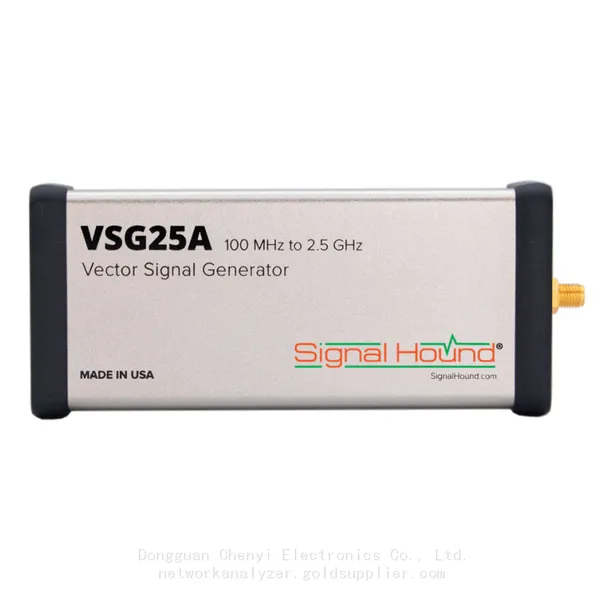
Signal Hound VSG25A 100 MHz to 2.5 GHz Vector Signal GeneratorNegotiableMOQ: 1 Unit
-
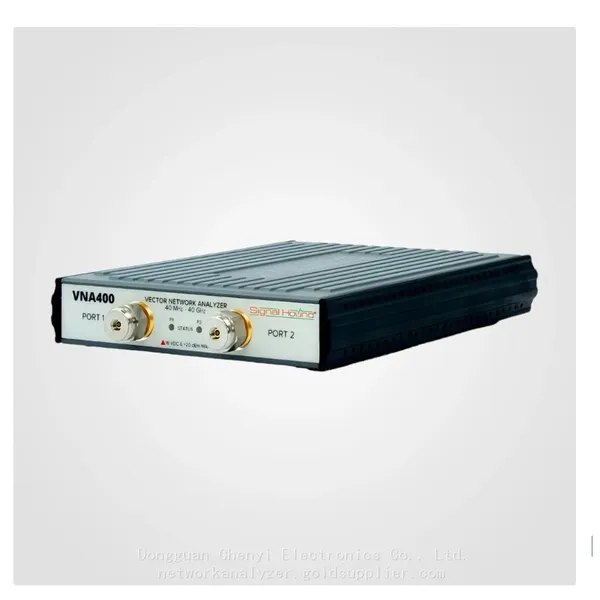
Signal Hound VNA400 40 MHz to 40 GHz 2-port Vector Network AnalyzerNegotiableMOQ: 1 Unit
-
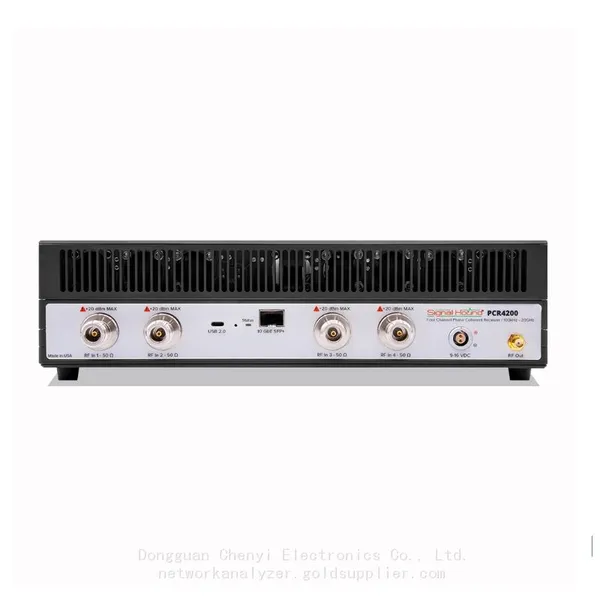
Signal Hound PCR4200 100 KHz to 20 GHz Four-Channel Phase Coherent ReceiverNegotiableMOQ: 1 Unit
-
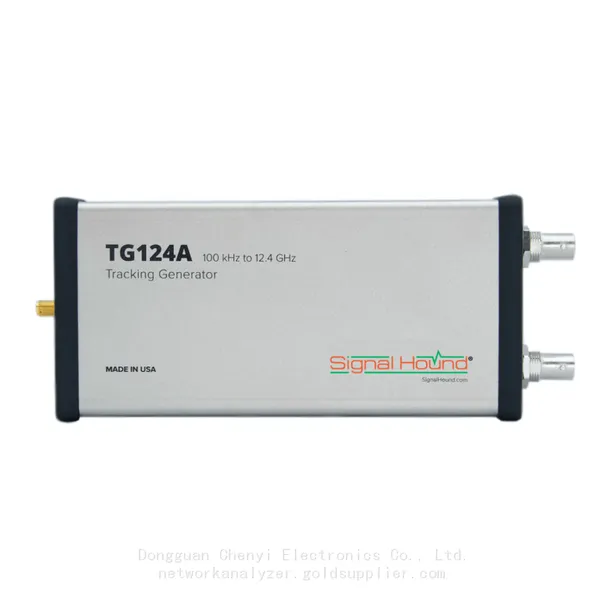
Signal Hound TG124A 100 KHz to 12.4 GHz Tracking GeneratorNegotiableMOQ: 1 Unit
-
Signal Hound TG44A 10 Hz to 4.4 GHz t Tracking GeneratorNegotiableMOQ: 1 Unit
-
Signal Hound SA124B 100 KHz to 12.4 GHz Spectrum AnalyzerNegotiableMOQ: 1 Unit
-
Signal Hound SA44B 1 Hz to 4.4 GHz Spectrum AnalyzerNegotiableMOQ: 1 Unit
-
SM200B Real‑time Spectrum Analyzer,USB3.0 RTSA,100kHz-20GHz,calibrated I/Q Capture for 5G Test & Interference HuntingNegotiableMOQ: 1 Unit
-
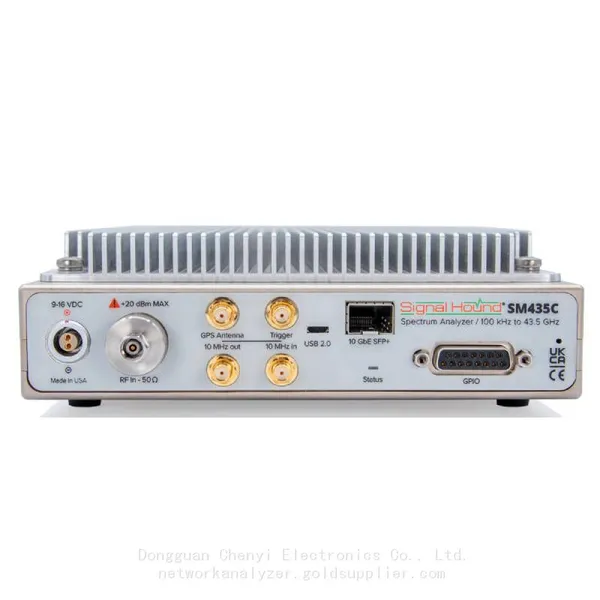
Signal Hound SM435C 100 KHz to 43.5GHz Real-time Spectrum Analyzer With 10GbE Monitoring ReceiversNegotiableMOQ: 1 Unit
-
Signal Hound SM435B 100 KHz to 43.5GHz Real-time Spectrum Analyzer Monitoring ReceiversNegotiableMOQ: 1 Unit
-
Signal Hound PN400 Phase Noise and VCO Test System 100 KHz to 43.5 GHzNegotiableMOQ: 1 Unit
-
Keysight E4980A Precision LCR Meter 20 Hz to 2 MHzNegotiableMOQ: 1 Unit
-
Keysight E4980B and E4980BL Precision LCR Meter 20 Hz to 2 MHzNegotiableMOQ: 1 Unit
-
Keysight U1733C Handheld LCR Meter 100Hz 120Hz 1kHz 10kHz 100kHzNegotiableMOQ: 1 Unit