
 Business License

Why Doesn't the Signal Hound BB60D's "Built-In Preselector" Block FM Broadcast Interference? supplier
Signal Hound BB60D real-time spectrum analyzer supplier
Why Doesn't the Signal Hound BB60D's "Built-In Preselector" Block FM Broadcast Interference? — There Is No Preselector Below 130 MHz, and How to Use It Properly
Symptom
A customer buys the Signal Hound BB60D specifically for its preselector and uses it for interference hunting / satellite downlink (LNB IF 950–2150 MHz) monitoring. Results: ① in vehicle HF/AM broadcast work (a few MHz to 30 MHz) the display is still plastered by adjacent strong transmitters — "isn't the preselector doing anything?" ② the same 88 MHz FM broadcast still pushes interference into a 100 MHz channel on the instrument even with the preselector enabled; ③ some users assume preselector = fully automatic and foolproof, never intervene manually, and find sensitivity worse than their BB60C-based expectations when measuring weak signals.
Root-Cause Analysis
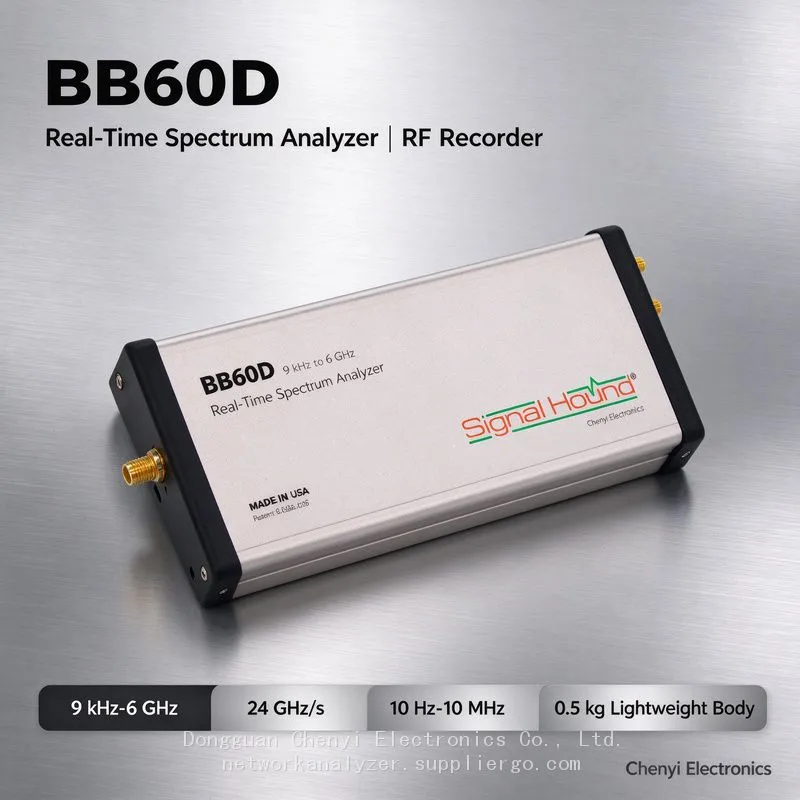
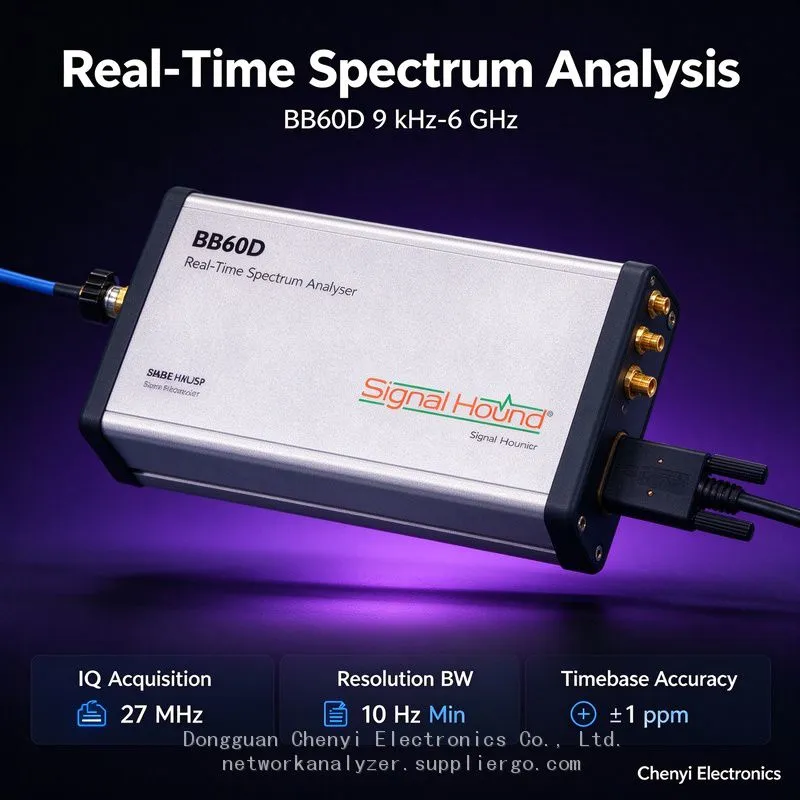
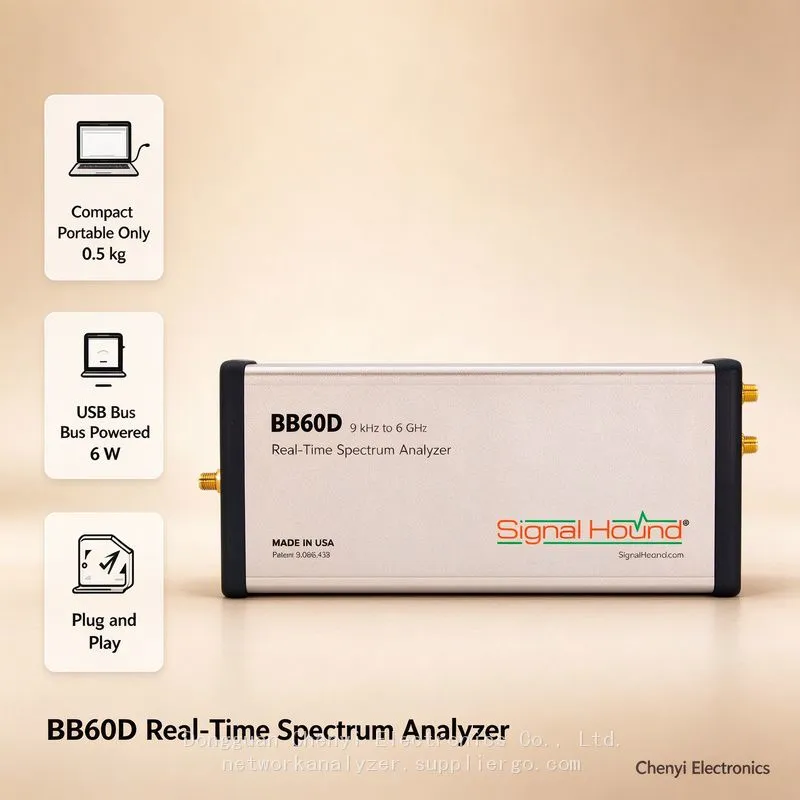
The preselector described in Signal Hound's official material for the Signal Hound BB60D is a "fully integrated preselector covering 130 MHz to 6 GHz" (wording from the launch material). That single sentence sets three usage boundaries:
9 kHz–130 MHz is outside preselector coverage: strong-interference rejection in HF, AM broadcast, power-line carrier and other low frequencies does not come from the preselector — that region remains a broadband direct path plus software image rejection, so intermodulation and compression can still occur in dense strong-signal environments. Expecting "whole-instrument filtering across the full range" is a misunderstanding.
A preselector is a switched sub-octave filter bank, not an adaptive notch: within its covered range it raises out-of-band rejection substantially (this is one of the sources of the 10 dB dynamic-range advantage over the BB60C), but strong nearby signals inside the same octave still get through — an 88 MHz broadcast against a 100 MHz channel is an "adjacent signal in the same band segment," and failing to reject it is a characteristic, not a fault. Blocking it requires an external bandpass or notch filter.
Setting coordination for weak-signal measurement: inserting the preselector adds path insertion loss, so when measuring extremely weak signals the trade-off between best sensitivity and the preselector state must be configured deliberately by the user (software preselector switch combined with attenuation). "Fully automatic" is not necessarily the optimum.
Band-switch steps: the preselector switches by frequency band, so regular steps in noise floor / level when sweeping across band boundaries are normal, and reports must be read segment by segment.
Correct Usage and Troubleshooting
Build a "floor ledger" segment by segment first: terminate the input with a 50 Ω load and sweep/store the full span separately for the <130 MHz region and the 130 MHz–6 GHz region. Re-measure after injecting the same strong transmitter — document quantitatively both the rejection improvement inside the preselector-covered region and the "no change" below 130 MHz, and user expectations align immediately.
Handle low-frequency interference with external hardware: for HF/AM scenarios add an external bandpass or a tunable notch filter, or switch to a receiver solution with stronger preselection.
Adjacent strong-carrier scenarios: the preselector cannot solve the same-octave problem — place an external cavity or dielectric bandpass filter near the target frequency for strong-signal suppression. The BB60D's dynamic range (in the 10 dB-above-C class) then still lets you measure weaker neighbouring signals, which is where its real advantage lies.
Find the optimum state for weak signals: measure the target frequency once with the preselector on and once off, compare noise floor versus interference rejection, and freeze the choice per scenario as a template (satellite LNB IF monitoring usually means preselector on plus suitable attenuation; broad survey sweeps can leave the preselector on automatic).
Archive the step data: record the position of every switching frequency and write cross-band reading differences into a compensation table, to prevent false reports of "level jumps for no reason."
Pre-Sales Wording
State plainly on the product page and in enquiry replies: "the built-in preselector covers 130 MHz–6 GHz; there is no preselection filtering from 9 kHz to 130 MHz." For customers ordering HF-monitoring duty while expecting "preselection across the whole range," one clear sentence saves one return shipment.
(Based on Signal Hound BB60D official launch material (fully integrated preselector covering 130 MHz–6 GHz; 10 dB dynamic-range improvement over the BB60C) and general receiver preselection practice.)
WhatsApp:+85268839563
WeChat :13728300615
Recently Posted
-
Signal Hound BB60C IQ Recording Fails Mid-Session, Files Are Full of Gaps, or Recording Stops Early — The Problem Is the PC ,supplier
November 19, 2026Signal Hound BB60C real-time spectrum analyzer supplierSignal Hound BB60C IQ Recording Fails Mid-Session, Files Are Full of Gaps, Read More
-
Signal Hound BB60C Is Plugged In but Spike Finds No Device — The LED Flashes Red/Green. How Do I Fix This? supplier
November 19, 2026Signal Hound BB60C real-time spectrum analyzer supplierSignal Hound BB60C Is Plugged In but Spike Finds No Device — The LED Flashe Read More
-
I Already Own a Signal HoundBB60C — Should I Move Up to the Signal Hound BB60D? Signal Hound BB60D real-time spectrum analyzer supplier
November 19, 2026Signal Hound BB60D real-time spectrum analyzer supplierI Already Own a Signal HoundBB60C — Should I Move Up to the Signal Hound BB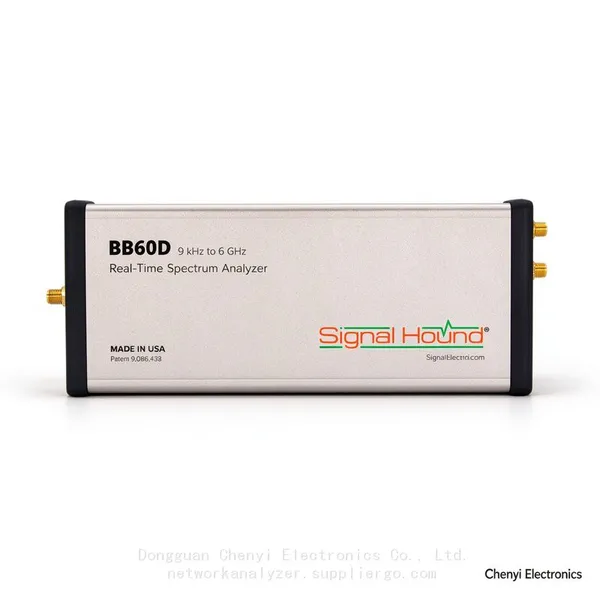 Read More
-
Monitoring the Satellite IF Band (950–2150 MHz) with a Signal Hound BB60D real-time spectrum analyzer supplier
November 19, 2026Signal Hound BB60D real-time spectrum analyzer supplierMonitoring the Satellite IF Band (950–2150 MHz) with a Signal Hound BB60D — Read More

Contact Us
Recommended Products
-
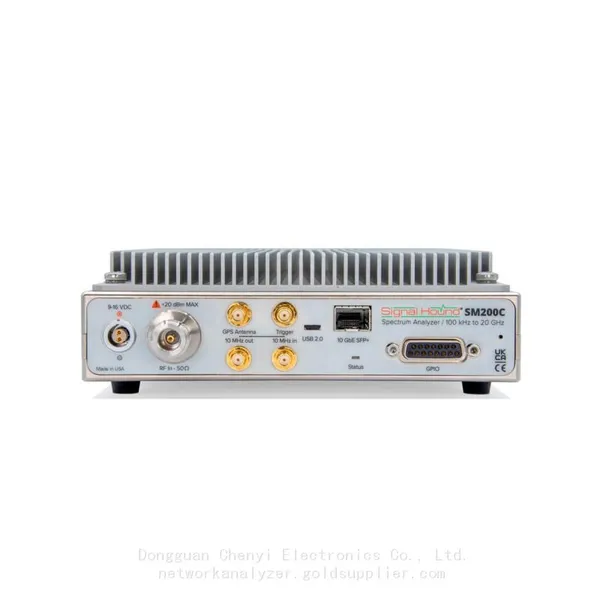
 Signal Hound SM200C 100 KHz to 20 GHz Real-time Spectrum Analyzer With 10GbE Monitoring ReceiversNegotiableMOQ: 1 Unit
-
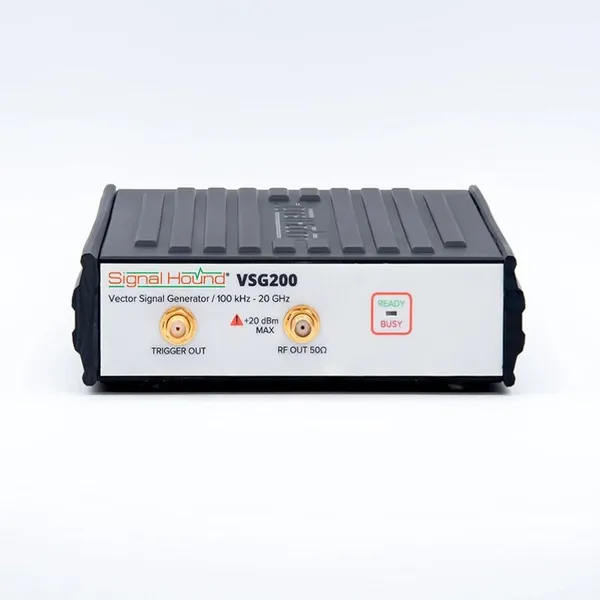
Signal Hound VSG200 Vector Signal Generator 100 KHz to 20 GHzNegotiableMOQ: 1 Unit
-
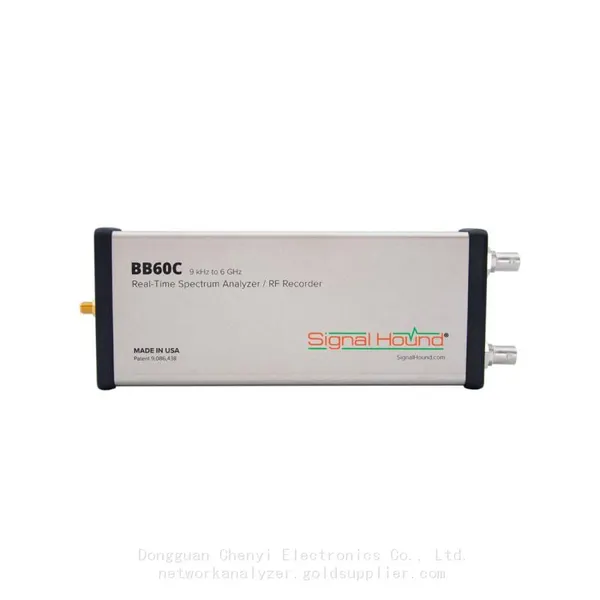
Signal Hound BB60C 9 KHz to 6 GHz Real-time Spectrum AnalyzerNegotiableMOQ: 1 Unit
-
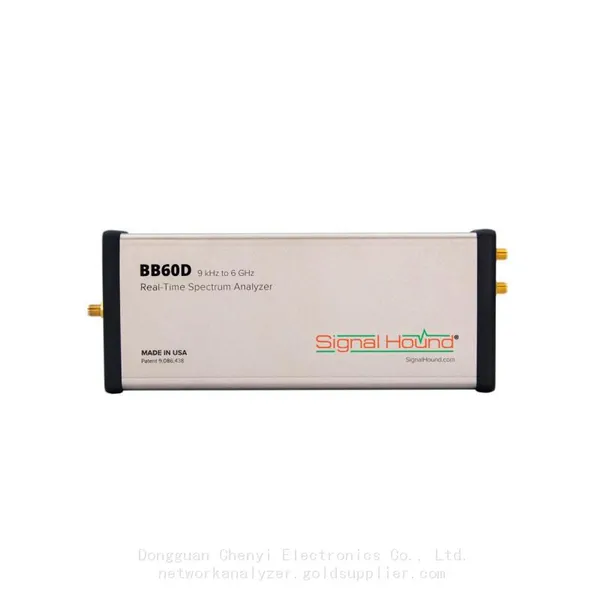
Signal Hound BB60D 9 KHz to 6 GHz Real-time Spectrum AnalyzerNegotiableMOQ: 1 Unit
-
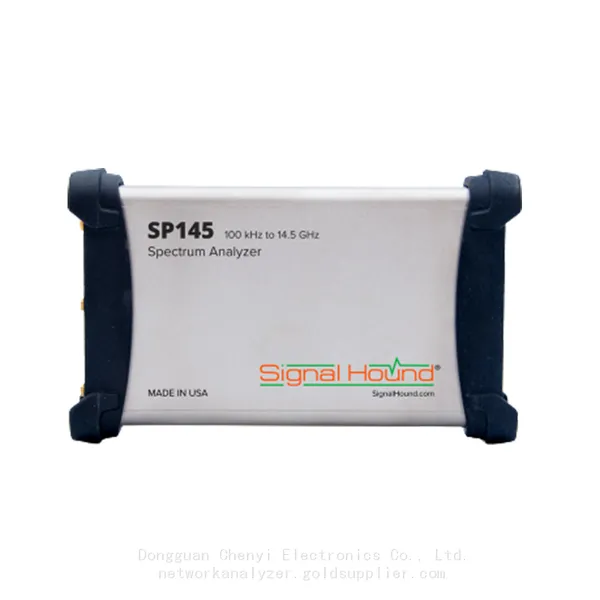
Signal Hound SP145 100 KHz to 14.5 GHz Real-time Spectrum Analyzer Monitoring ReceiversNegotiableMOQ: 1 Unit
-
Signal Hound VSG60A 50 MHz to 6 GHz GHz Vector Signal GeneratorNegotiableMOQ: 1 Unit
-
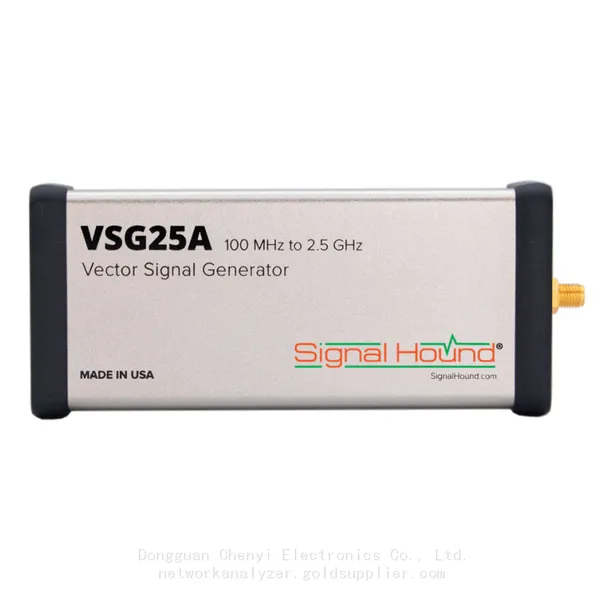
Signal Hound VSG25A 100 MHz to 2.5 GHz Vector Signal GeneratorNegotiableMOQ: 1 Unit
-
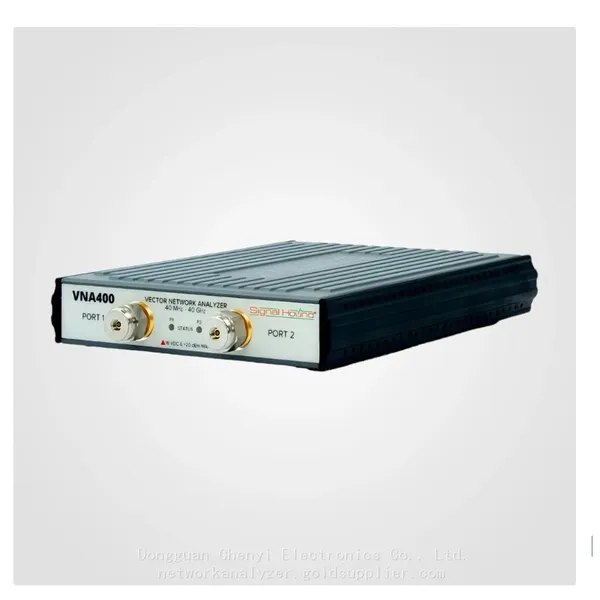
Signal Hound VNA400 40 MHz to 40 GHz 2-port Vector Network AnalyzerNegotiableMOQ: 1 Unit
-
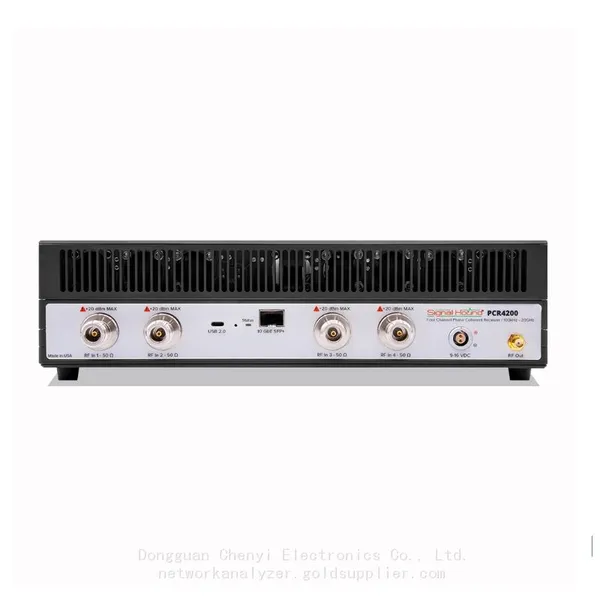
Signal Hound PCR4200 100 KHz to 20 GHz Four-Channel Phase Coherent ReceiverNegotiableMOQ: 1 Unit
-
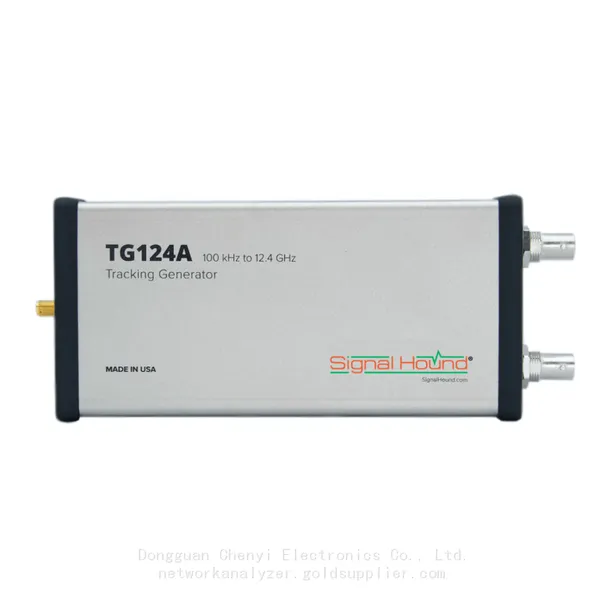
Signal Hound TG124A 100 KHz to 12.4 GHz Tracking GeneratorNegotiableMOQ: 1 Unit
-
Signal Hound TG44A 10 Hz to 4.4 GHz t Tracking GeneratorNegotiableMOQ: 1 Unit
-
Signal Hound SA124B 100 KHz to 12.4 GHz Spectrum AnalyzerNegotiableMOQ: 1 Unit
-
Signal Hound SA44B 1 Hz to 4.4 GHz Spectrum AnalyzerNegotiableMOQ: 1 Unit
-
SM200B Real‑time Spectrum Analyzer,USB3.0 RTSA,100kHz-20GHz,calibrated I/Q Capture for 5G Test & Interference HuntingNegotiableMOQ: 1 Unit
-
Signal Hound SM435C 100 KHz to 43.5GHz Real-time Spectrum Analyzer With 10GbE Monitoring ReceiversNegotiableMOQ: 1 Unit
-
Signal Hound SM435B 100 KHz to 43.5GHz Real-time Spectrum Analyzer Monitoring ReceiversNegotiableMOQ: 1 Unit
-
Signal Hound PN400 Phase Noise and VCO Test System 100 KHz to 43.5 GHzNegotiableMOQ: 1 Unit
-
Keysight E4980A Precision LCR Meter 20 Hz to 2 MHzNegotiableMOQ: 1 Unit
-
Keysight E4980B and E4980BL Precision LCR Meter 20 Hz to 2 MHzNegotiableMOQ: 1 Unit
-
Keysight U1733C Handheld LCR Meter 100Hz 120Hz 1kHz 10kHz 100kHzNegotiableMOQ: 1 Unit