
 Business License

I Already Own a Signal HoundBB60C — Should I Move Up to the Signal Hound BB60D? Signal Hound BB60D real-time spectrum analyzer supplier
Signal Hound BB60D real-time spectrum analyzer supplier
I Already Own a Signal HoundBB60C — Should I Move Up to the Signal Hound BB60D? A Quantified Decision Checklist So You Don't Pay for "New"
The Situation
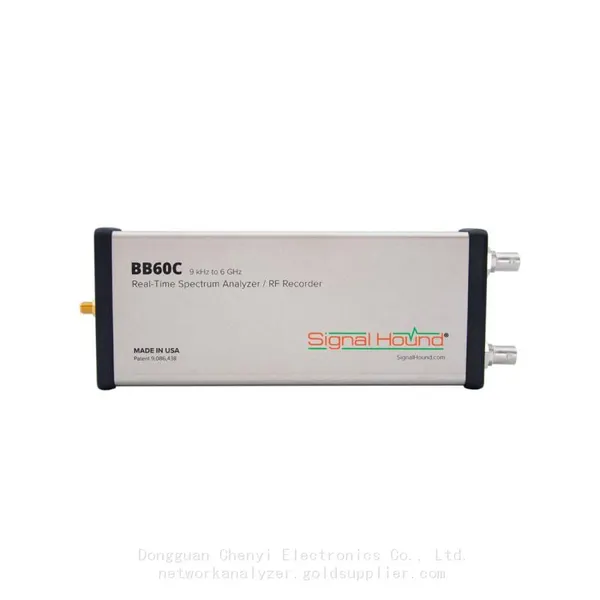
This one is not a fault, but it is the single highest-volume after-sales enquiry for this model: "My C still works, every salesperson says the D is better — should I spend $4,950–$5,450 (official list price range) to upgrade?" The results split into two failure modes: ① blind upgrading, then discovering that in their own application (clean spectrum, mid-level signals) C and D are indistinguishable and the budget was wasted; ② not upgrading when they should have, failing to resolve weak signals on a C in a strong-adjacent-channel environment, filing a service claim because "the DANL doesn't meet spec," when in fact dynamic range was the limiting factor.
Root-Cause Analysis
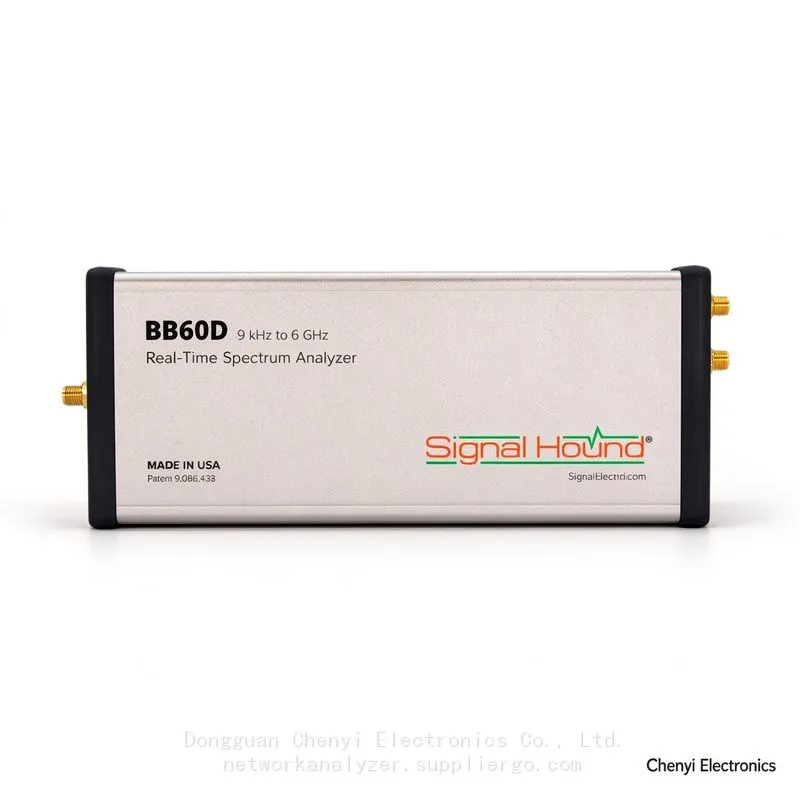
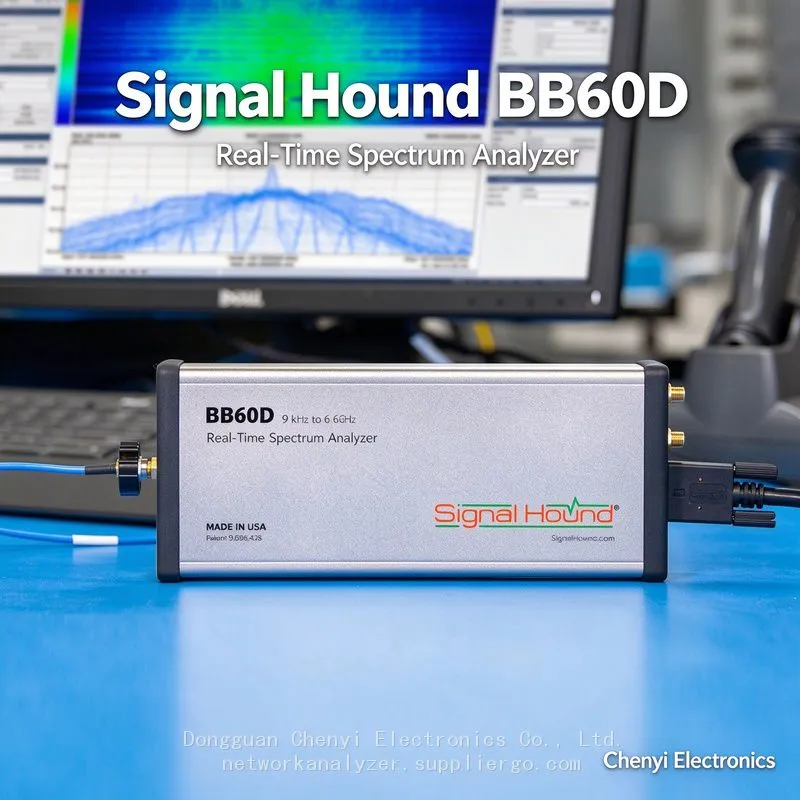
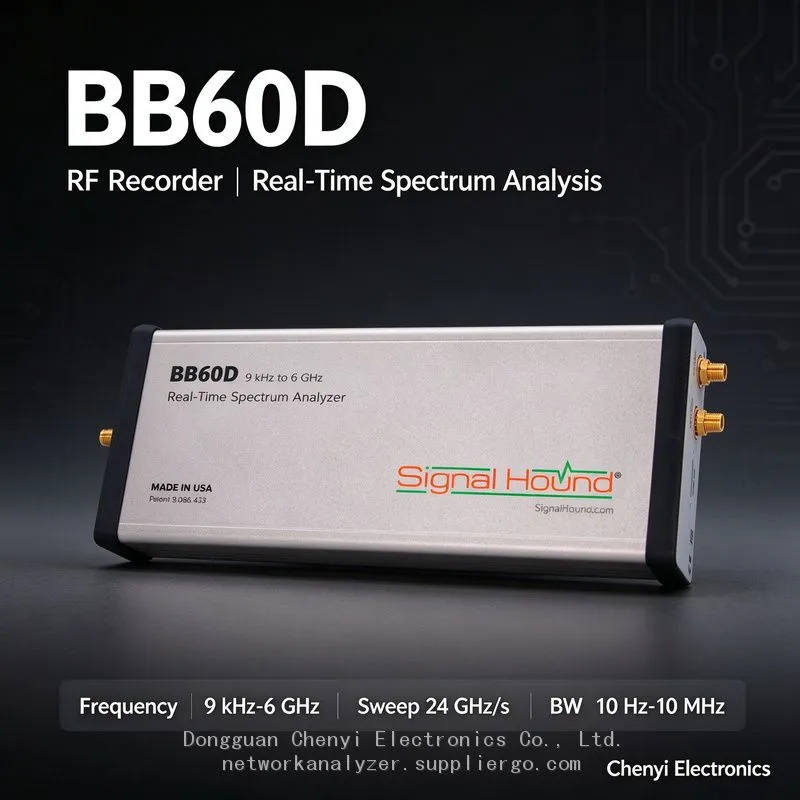
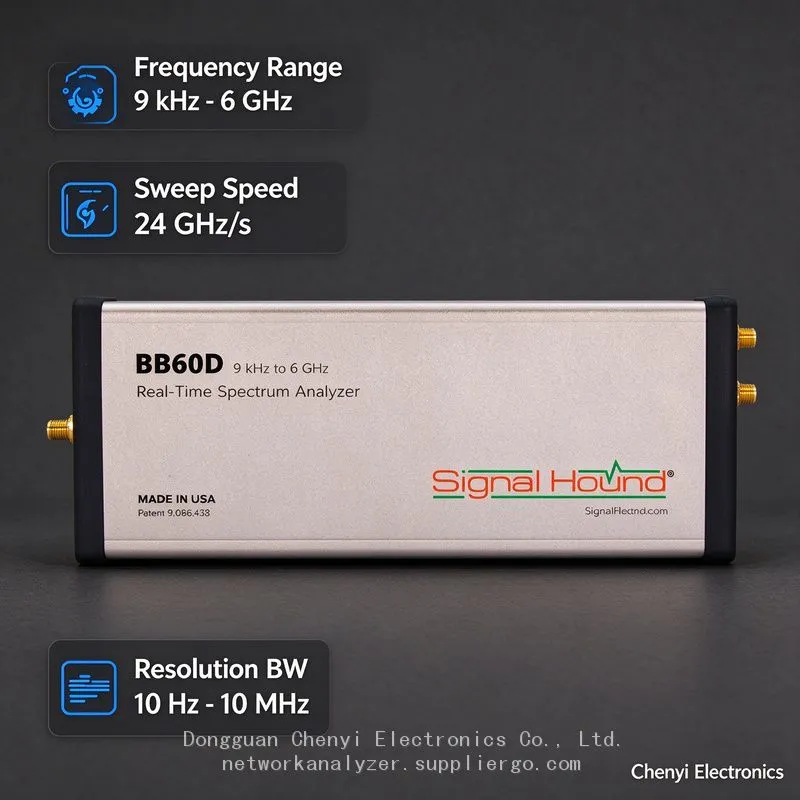
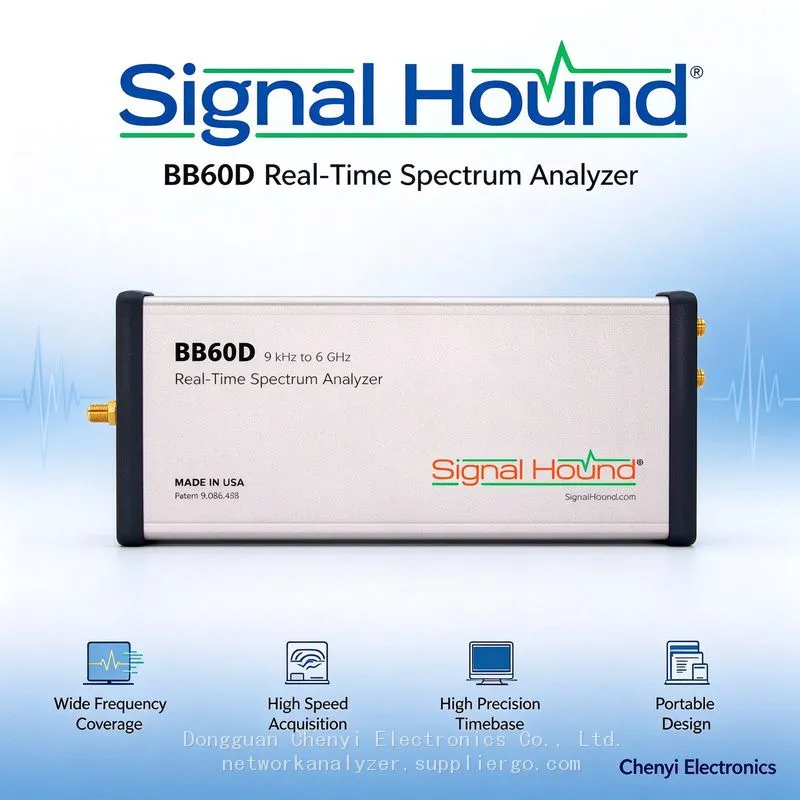
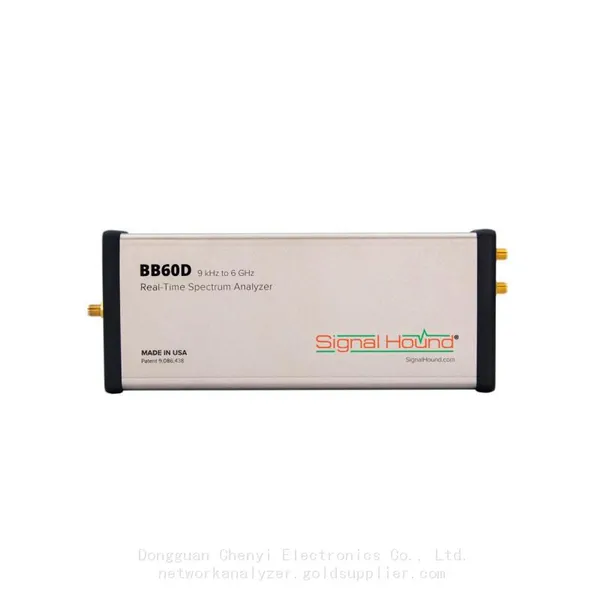
The three substantive changes of the D over the C (all with official wording): a built-in preselector covering 130 MHz–6 GHz, roughly 10 dB more dynamic range (from high-IP3 amplifiers plus the preselector), and about 10 dB better close-in phase noise starting at a 100 kHz offset. The IQ bandwidth floor also moves from 250 kHz down to 4 kHz. The ADC is the same 14-bit part — meaning "noise-floor-class metrics" largely share a common origin, and every difference concentrates on measurement capability in strong-interference environments. Whether to upgrade depends on which side your scenario falls on.
Quantified Decision Checklist (Decide by Number of Hits)
Recommend moving to the D (≥2 hits):
Your working environment has strong adjacent-channel or out-of-band transmitters (next to base stations, near radar, around broadcast sites), and on the C you actually observe compression or intermodulation smearing when reading a weak signal beside a strong one;
You need to measure small signals close to carrier (offsets beyond −70 dBc), frequency-synthesiser / PLL output phase noise, or hopping adjacent-channel leakage — all relying on the close-in phase-noise improvement from 100 kHz onward;
Satellite IF / fixed-band monitoring needs out-of-band rejection (950–2150 MHz and other preselector-covered segments, including environments with strong images and LO leakage);
You need ultra-slow IQ from 4 kHz to 250 kHz for long-duration narrowband recording / slowly changing near-ground spectrum analysis;
Vehicle-mounted or field mobile monitoring (the D's 6 W dual-port bus power architecture is fussier about cabling, but its dynamic-range advantage is worth most in high-field outdoor environments — provided you do the vehicle integration work).
No need to move to the D (the C is sufficient):
Shielded-lab, single-carrier or mid-level routine measurements — DANL and sensitivity share a common origin between the two, so the benefit is <2 dB;
Pure EMI low-frequency pre-testing (the preselector does not cover below 130 MHz, and the C's simpler chain is actually an advantage);
Budget-sensitive general teaching labs or high-volume bench deployments.
Switchover Execution Points
Keep before/after evidence: run a dual-source "strong adjacent + weak signal" comparison on your real DUT (method in the dynamic-range verification article) and only decide once the delta is ≥6 dB — let data replace marketing claims;
Accessory handover: the D powers from dual USB ports, so single-port laptop setups need rework per the vehicle-mount / dual-port checklist;
Program migration: finish the capability-query refactor and two-machine regression first (see the C/D mixed-deployment article), so monitoring service isn't interrupted on upgrade day;
Dispose of the old unit properly: the BB60C holds its value well — use the official trade-in or resale channel rather than letting it gather dust as a demoted spare;
Rebuild the step map: when the new unit arrives, draw its switching-point map following article 06, and "survey the terrain" before it replaces the old machine in the unattended system.
Pre-Sales Advice
Put this hit-count checklist directly on the product page. Telling the customers who shouldn't buy not to buy, and giving the ones who should an evidence chain, makes for the highest-margin, lowest-support-cost page a premium instrument shop can have.
(Based on Signal Hound's official BB60D product page, launch material and forum replies (preselector, 10 dB dynamic range, phase-noise improvement from 100 kHz offset, same 14-bit ADC), together with the official list price range.)
Recently Posted
-
Signal Hound BB60C IQ Recording Fails Mid-Session, Files Are Full of Gaps, or Recording Stops Early — The Problem Is the PC ,supplier
November 19, 2026Signal Hound BB60C real-time spectrum analyzer supplierSignal Hound BB60C IQ Recording Fails Mid-Session, Files Are Full of Gaps, Read More
-
Signal Hound BB60C Is Plugged In but Spike Finds No Device — The LED Flashes Red/Green. How Do I Fix This? supplier
November 19, 2026Signal Hound BB60C real-time spectrum analyzer supplierSignal Hound BB60C Is Plugged In but Spike Finds No Device — The LED Flashe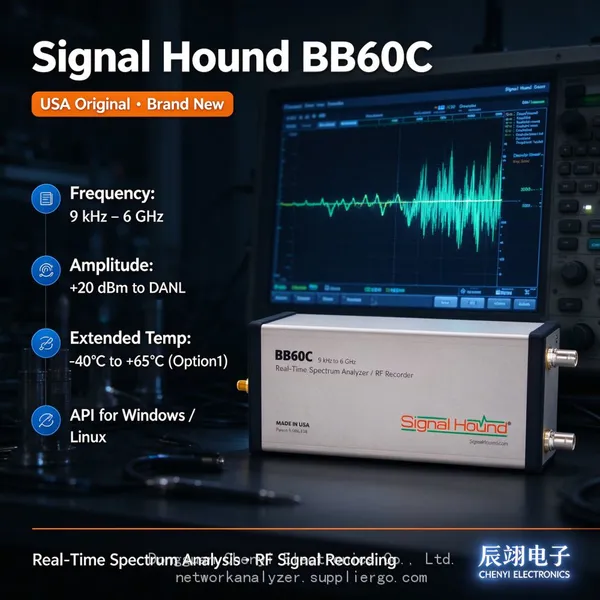 Read More
-
Monitoring the Satellite IF Band (950–2150 MHz) with a Signal Hound BB60D real-time spectrum analyzer supplier
November 19, 2026Signal Hound BB60D real-time spectrum analyzer supplierMonitoring the Satellite IF Band (950–2150 MHz) with a Signal Hound BB60D —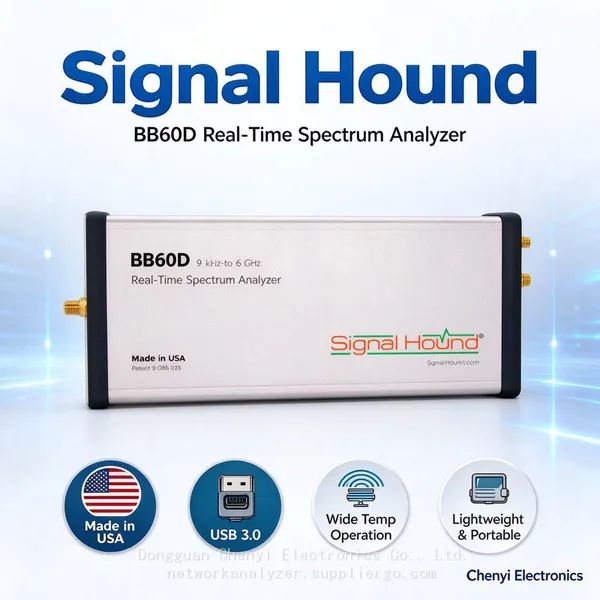 Read More
-
The Signal Hound BB60D Still Fears +20 dBm: The Preselector Is Not a Fuse Signal Hound BB60D real-time spectrum analyzer supplier
November 19, 2026Signal Hound BB60D real-time spectrum analyzer supplierThe Signal Hound BB60D Still Fears +20 dBm: The Preselector Is Not a Fuse —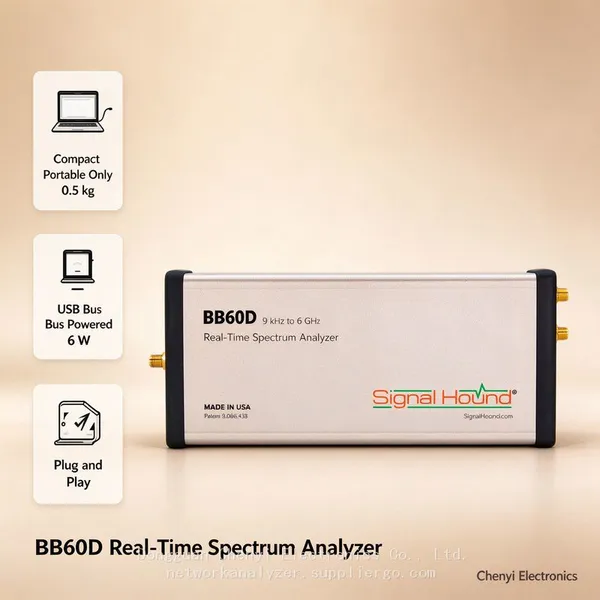 Read More

Contact Us
Recommended Products
-
 Signal Hound SM200C 100 KHz to 20 GHz Real-time Spectrum Analyzer With 10GbE Monitoring ReceiversNegotiableMOQ: 1 Unit
-
Signal Hound VSG200 Vector Signal Generator 100 KHz to 20 GHzNegotiableMOQ: 1 Unit
-
Signal Hound BB60C 9 KHz to 6 GHz Real-time Spectrum AnalyzerNegotiableMOQ: 1 Unit
-
Signal Hound BB60D 9 KHz to 6 GHz Real-time Spectrum AnalyzerNegotiableMOQ: 1 Unit
-
Signal Hound SP145 100 KHz to 14.5 GHz Real-time Spectrum Analyzer Monitoring ReceiversNegotiableMOQ: 1 Unit
-
Signal Hound VSG60A 50 MHz to 6 GHz GHz Vector Signal GeneratorNegotiableMOQ: 1 Unit
-
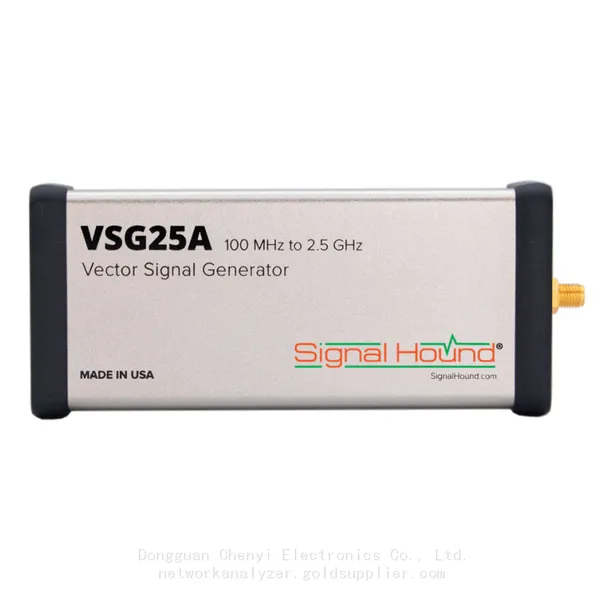
Signal Hound VSG25A 100 MHz to 2.5 GHz Vector Signal GeneratorNegotiableMOQ: 1 Unit
-
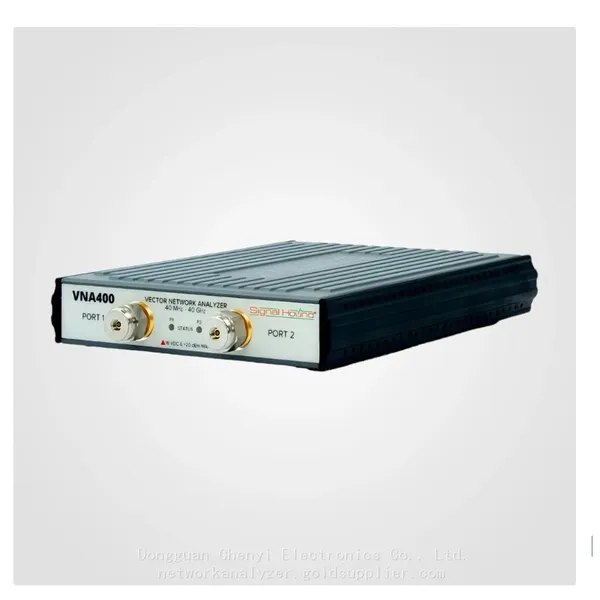
Signal Hound VNA400 40 MHz to 40 GHz 2-port Vector Network AnalyzerNegotiableMOQ: 1 Unit
-
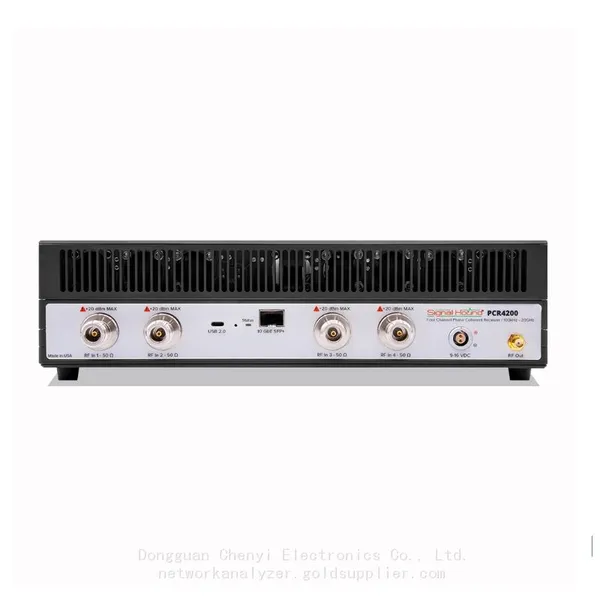
Signal Hound PCR4200 100 KHz to 20 GHz Four-Channel Phase Coherent ReceiverNegotiableMOQ: 1 Unit
-
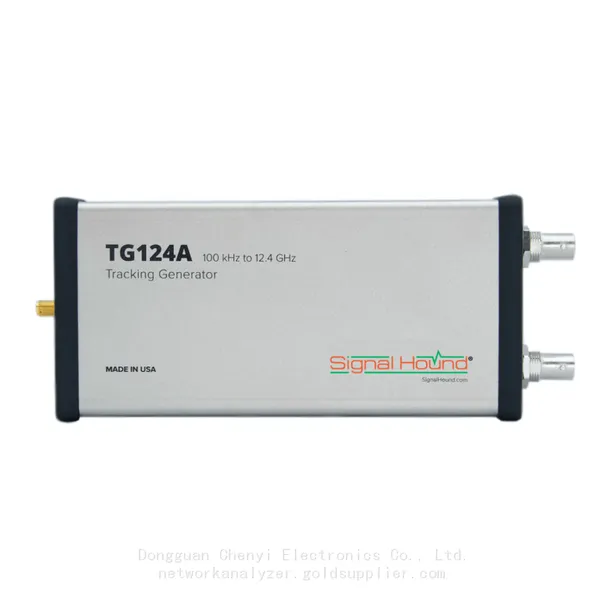
Signal Hound TG124A 100 KHz to 12.4 GHz Tracking GeneratorNegotiableMOQ: 1 Unit
-
Signal Hound TG44A 10 Hz to 4.4 GHz t Tracking GeneratorNegotiableMOQ: 1 Unit
-
Signal Hound SA124B 100 KHz to 12.4 GHz Spectrum AnalyzerNegotiableMOQ: 1 Unit
-
Signal Hound SA44B 1 Hz to 4.4 GHz Spectrum AnalyzerNegotiableMOQ: 1 Unit
-
SM200B Real‑time Spectrum Analyzer,USB3.0 RTSA,100kHz-20GHz,calibrated I/Q Capture for 5G Test & Interference HuntingNegotiableMOQ: 1 Unit
-
Signal Hound SM435C 100 KHz to 43.5GHz Real-time Spectrum Analyzer With 10GbE Monitoring ReceiversNegotiableMOQ: 1 Unit
-
Signal Hound SM435B 100 KHz to 43.5GHz Real-time Spectrum Analyzer Monitoring ReceiversNegotiableMOQ: 1 Unit
-
Signal Hound PN400 Phase Noise and VCO Test System 100 KHz to 43.5 GHzNegotiableMOQ: 1 Unit
-
Keysight E4980A Precision LCR Meter 20 Hz to 2 MHzNegotiableMOQ: 1 Unit
-
Keysight E4980B and E4980BL Precision LCR Meter 20 Hz to 2 MHzNegotiableMOQ: 1 Unit
-
Keysight U1733C Handheld LCR Meter 100Hz 120Hz 1kHz 10kHz 100kHzNegotiableMOQ: 1 Unit