
 Business License

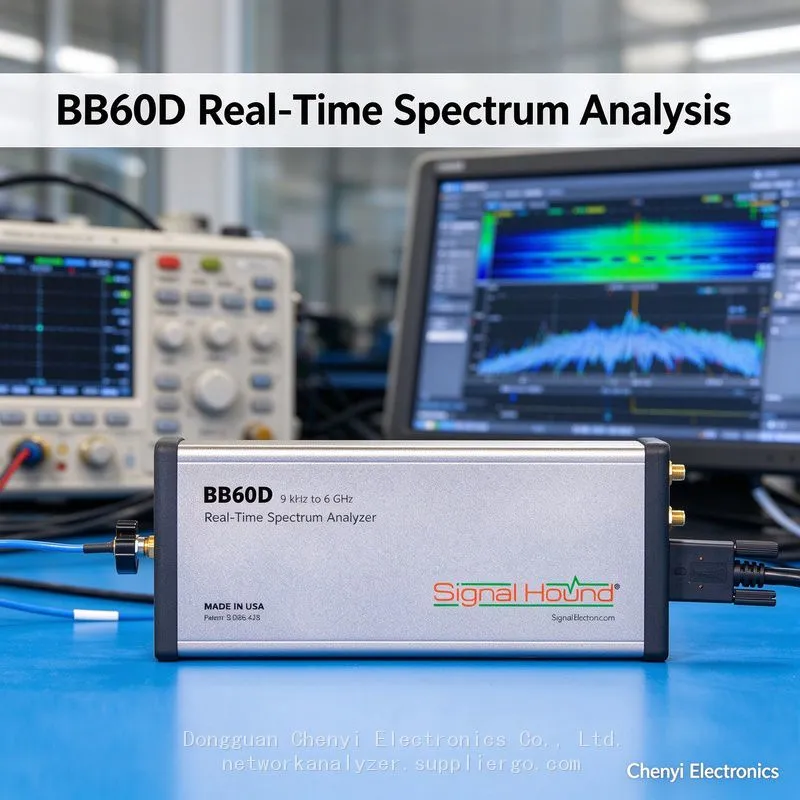
Everyone Says the Signal Hound BB60D Has 10 dB More Dynamic Range Than the BB60C supplier
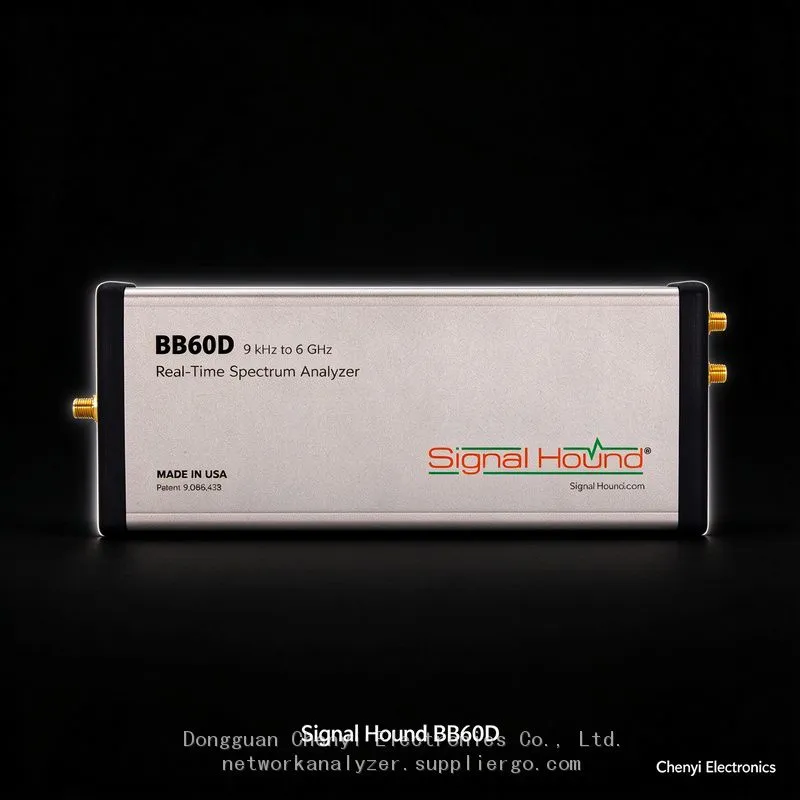
Signal Hound BB60D real-time spectrum analyzer supplier
Everyone Says the Signal Hound BB60D Has 10 dB More Dynamic Range Than the BB60C — Why Can't I Measure It? Four Preconditions for the Improvement to Show Up
Symptom
An R&D user upgrades from a BB60C to a BB60D and wants to verify "the officially claimed 10 dB dynamic-range improvement" (close-in / strong-adjacent-channel scenarios). Using the same PC and identical settings, they compare SFDR and adjacent-channel rejection readings between the two units; the gap varies wildly, and sometimes amounts to only 2–3 dB. Complaint filed: "the upgrade is imperceptible, the spec is inflated."
Root-Cause Analysis
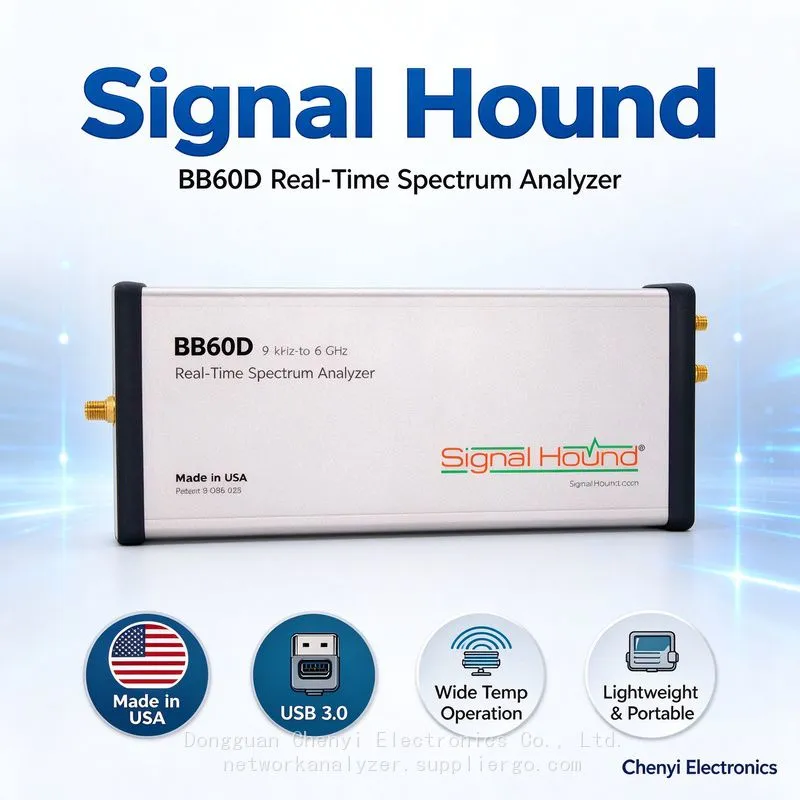
The Signal Hound BB60D's dynamic-range improvement comes from an architecture upgrade — Signal Hound's official forum reply is explicit: the same 14-bit ADC as the BB60C, with the gain coming from high-IP3 amplifiers plus the fully integrated preselector (with roughly 10 dB of LO phase-noise improvement in the 100 kHz offset region on top). In other words, this is an improvement confined to specific scenarios, and the wrong comparison method simply will not reveal it:
Wrong scenario: the benefit of the preselector and high-IP3 amplifiers shows up when measuring a weak signal while strong out-of-band or adjacent-channel interference is present. For a single carrier in a clean environment, the difference in DANL readings between the two units is far smaller than 10 dB; sweeping the noise floor in an empty environment and comparing the two inevitably yields "not much difference."
Mismatched settings: the BB60D's gain depends on the preselector and attenuator steps participating correctly. If the preselector is off on the D during the comparison, or both units sit on the same "Auto" while their automatic switching points actually differ, you are not testing the intended signal path at all.
Flattened by the PC-side weak link: when both instruments share one host with tight power or link headroom, USB jitter and IQ-processing overhead create an error floor that pulls both units together — if the test system's own repeatability is worse than 2 dB, statistics on a 10 dB-class difference are unstable.
Mixed metric definitions: the 10 dB dynamic-range improvement maps mainly to SFDR / close-in / out-of-band rejection metrics, whereas DANL sensitivity improves only modestly — using a DANL delta to validate a dynamic-range claim is answering the wrong exam question.
The Correct Comparative Verification Method (Three Steps)
Create a "strong + weak" scenario: source A outputs a −90 dBm weak signal at the target frequency while source B outputs −10 to 0 dBm of strong interference in an adjacent channel at ±10–50 MHz; combine the two through a splitter/combiner into the BB unit. On each instrument measure the lowest readable level of the weak signal / the visible depth of dynamic range — the difference is a direct expression of the dynamic-range improvement.
Freeze the link conditions: same host, same cables, preselector enabled, attenuator manually fixed (e.g. 10 dB), RBW matched to the weak signal's channel width; repeat three times per instrument and take the median.
Inspect the close-in phase-noise skirt: on the same strong carrier, compare the depth of the noise skirt across the 100 kHz–1 MHz offset region (the band where the BB60D's LO improved by 10 dB) — this is the most intuitive curve evidence of "ability to see small signals under masking."
Expectation Management (Pre-Sales / Selection)
One sentence for the buyer: "Does your application involve finding the weak signal next to the strong one? Yes — then moving to the D model pays off. Only measuring mid-level signals in a clean spectrum? The C model is enough, and the budget you save buys attenuators or filters more usefully." Writing the 10 dB's cashing-in scenarios into the product page reads far more professional than listing parameters.
(Based on Signal Hound's official BB60D forum reply (same ADC; improvement comes from high-IP3 amplifiers) and launch material (preselector, 10 dB dynamic range, 10 dB phase-noise improvement from 100 kHz offset onward).)
Recently Posted
-
Signal Hound BB60C Is Plugged In but Spike Finds No Device — The LED Flashes Red/Green. How Do I Fix This? supplier
November 19, 2026Signal Hound BB60C real-time spectrum analyzer supplierSignal Hound BB60C Is Plugged In but Spike Finds No Device — The LED Flashe Read More
-
The Signal Hound BB60D Still Fears +20 dBm: The Preselector Is Not a Fuse Signal Hound BB60D real-time spectrum analyzer supplier
November 19, 2026Signal Hound BB60D real-time spectrum analyzer supplierThe Signal Hound BB60D Still Fears +20 dBm: The Preselector Is Not a Fuse — Read More
-
The Noise Floor "Steps Along" When Sweeping Across Bands on a Signal Hound BB60D, and the Same Signal Reads 2 dB Differ at Another Center Frequency
November 19, 2026Signal Hound BB60D real-time spectrum analyzer supplierThe Noise Floor "Steps Along" When Sweeping Across Bands on a Sig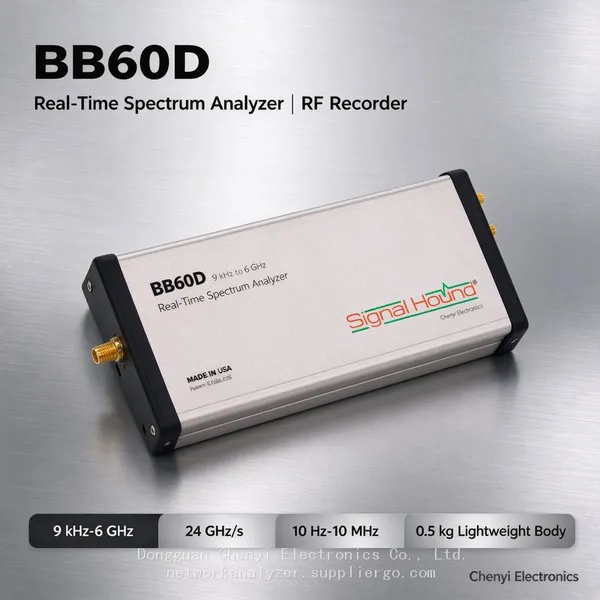 Read More
-
My Signal Hound BB60C Can't Pick Up Weak Signals Between 9 kHz and 20 MHz and Readings Keep Jumping -supplier
November 18, 2026Signal Hound BB60C real-time spectrum analyzer supplierMy Signal Hound BB60C Can't Pick Up Weak Signals Between 9 kHz and 20 M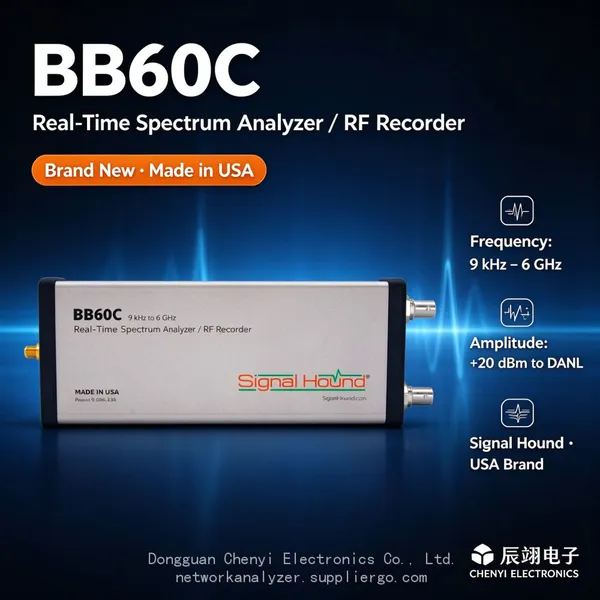 Read More

Contact Us
Recommended Products
-
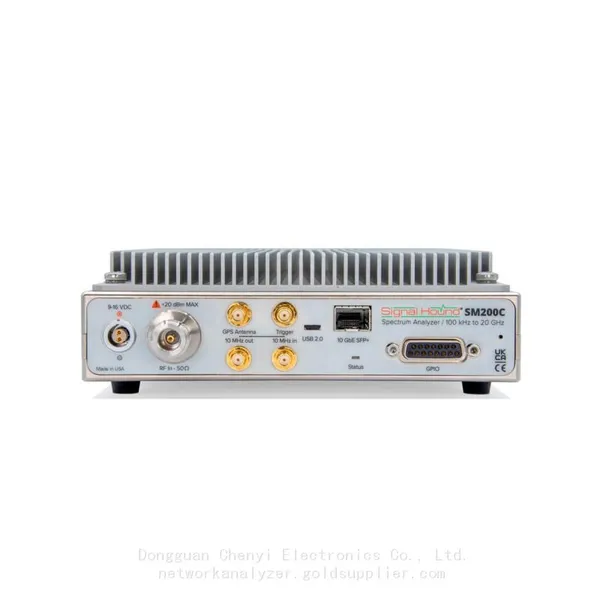
 Signal Hound SM200C 100 KHz to 20 GHz Real-time Spectrum Analyzer With 10GbE Monitoring ReceiversNegotiableMOQ: 1 Unit
-
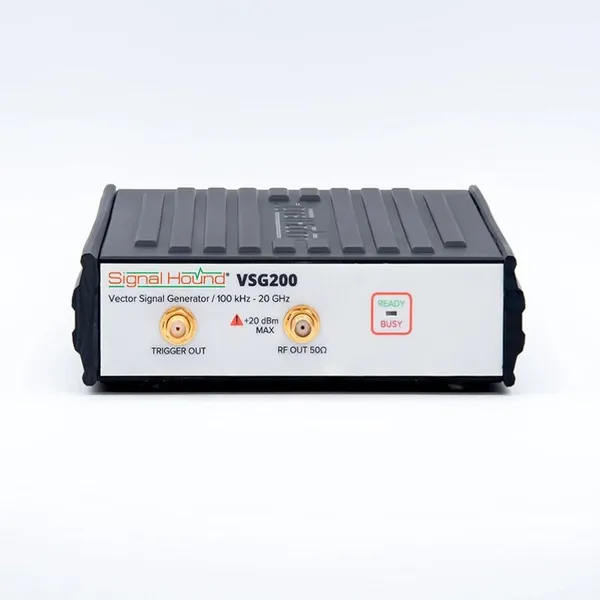
Signal Hound VSG200 Vector Signal Generator 100 KHz to 20 GHzNegotiableMOQ: 1 Unit
-
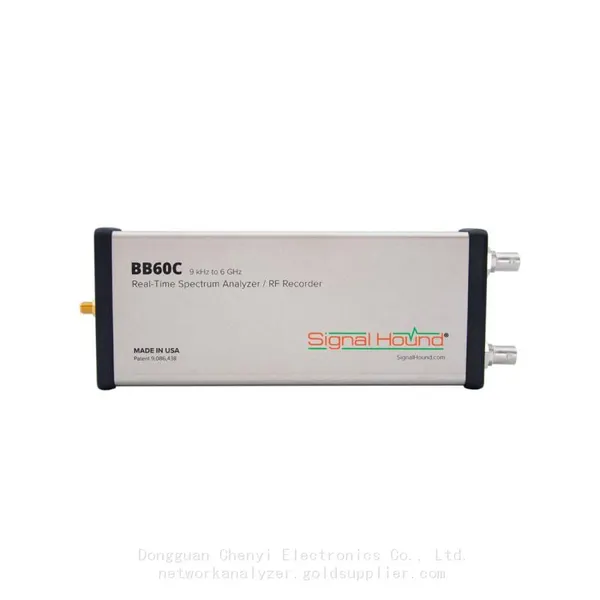
Signal Hound BB60C 9 KHz to 6 GHz Real-time Spectrum AnalyzerNegotiableMOQ: 1 Unit
-
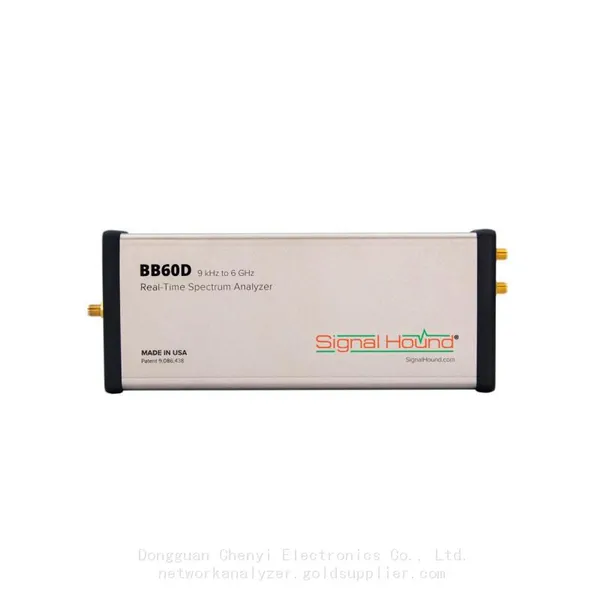
Signal Hound BB60D 9 KHz to 6 GHz Real-time Spectrum AnalyzerNegotiableMOQ: 1 Unit
-
Signal Hound SP145 100 KHz to 14.5 GHz Real-time Spectrum Analyzer Monitoring ReceiversNegotiableMOQ: 1 Unit
-
Signal Hound VSG60A 50 MHz to 6 GHz GHz Vector Signal GeneratorNegotiableMOQ: 1 Unit
-
Signal Hound VSG25A 100 MHz to 2.5 GHz Vector Signal GeneratorNegotiableMOQ: 1 Unit
-
Signal Hound VNA400 40 MHz to 40 GHz 2-port Vector Network AnalyzerNegotiableMOQ: 1 Unit
-
Signal Hound PCR4200 100 KHz to 20 GHz Four-Channel Phase Coherent ReceiverNegotiableMOQ: 1 Unit
-
Signal Hound TG124A 100 KHz to 12.4 GHz Tracking GeneratorNegotiableMOQ: 1 Unit
-
Signal Hound TG44A 10 Hz to 4.4 GHz t Tracking GeneratorNegotiableMOQ: 1 Unit
-
Signal Hound SA124B 100 KHz to 12.4 GHz Spectrum AnalyzerNegotiableMOQ: 1 Unit
-
Signal Hound SA44B 1 Hz to 4.4 GHz Spectrum AnalyzerNegotiableMOQ: 1 Unit
-
SM200B Real‑time Spectrum Analyzer,USB3.0 RTSA,100kHz-20GHz,calibrated I/Q Capture for 5G Test & Interference HuntingNegotiableMOQ: 1 Unit
-
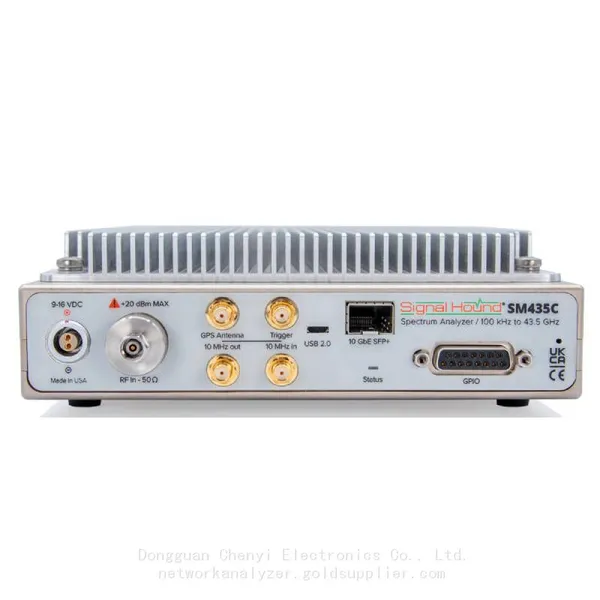
Signal Hound SM435C 100 KHz to 43.5GHz Real-time Spectrum Analyzer With 10GbE Monitoring ReceiversNegotiableMOQ: 1 Unit
-
Signal Hound SM435B 100 KHz to 43.5GHz Real-time Spectrum Analyzer Monitoring ReceiversNegotiableMOQ: 1 Unit
-
Signal Hound PN400 Phase Noise and VCO Test System 100 KHz to 43.5 GHzNegotiableMOQ: 1 Unit
-
Keysight E4980A Precision LCR Meter 20 Hz to 2 MHzNegotiableMOQ: 1 Unit
-
Keysight E4980B and E4980BL Precision LCR Meter 20 Hz to 2 MHzNegotiableMOQ: 1 Unit
-
Keysight U1733C Handheld LCR Meter 100Hz 120Hz 1kHz 10kHz 100kHzNegotiableMOQ: 1 Unit