
 Business License

Cross‑correlation enabled on Signal Hound PN400; noise floor failed to drop 20 dB, trace grows noisier with averaging, cross‑correlation not convergin
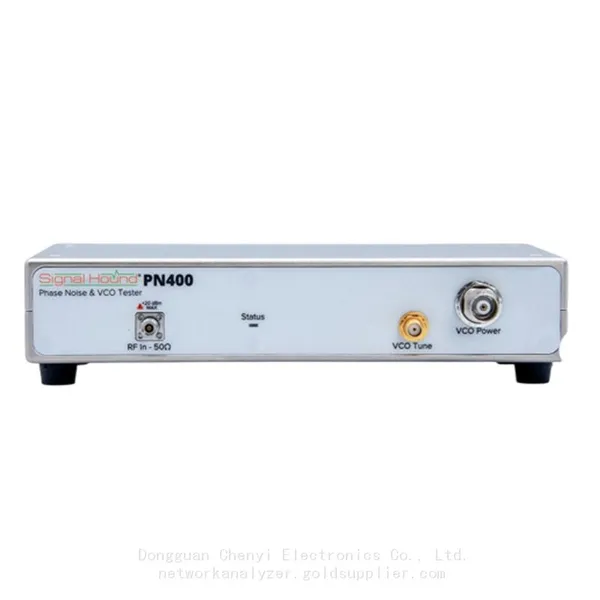
Signal Hound PN400 phase noise and VCO tester supplier
I turned on cross-correlation in the Signal Hound PN400 but the floor didn't drop 20 dB, and the trace got hairier the more I averaged — troubleshooting a non-converging cross-correlation
Symptom
The customer bought the Signal Hound PN400 test system specifically for the "cross-correlation pushes the phase-noise floor down 20–30 dB" claim. Measuring a certain VCO on a single channel hits bottom at -150 dBc/Hz; after enabling dual-channel cross-correlation and running for a few minutes, the floor has only come down 3–5 dB. Increasing the number of averages makes the sawtooth ripple worse. Restarting the software and re-measuring gives results that are sometimes good, sometimes bad. Suspicion falls on "the cross-correlation feature isn't working / the instrument is broken".
Root-cause analysis
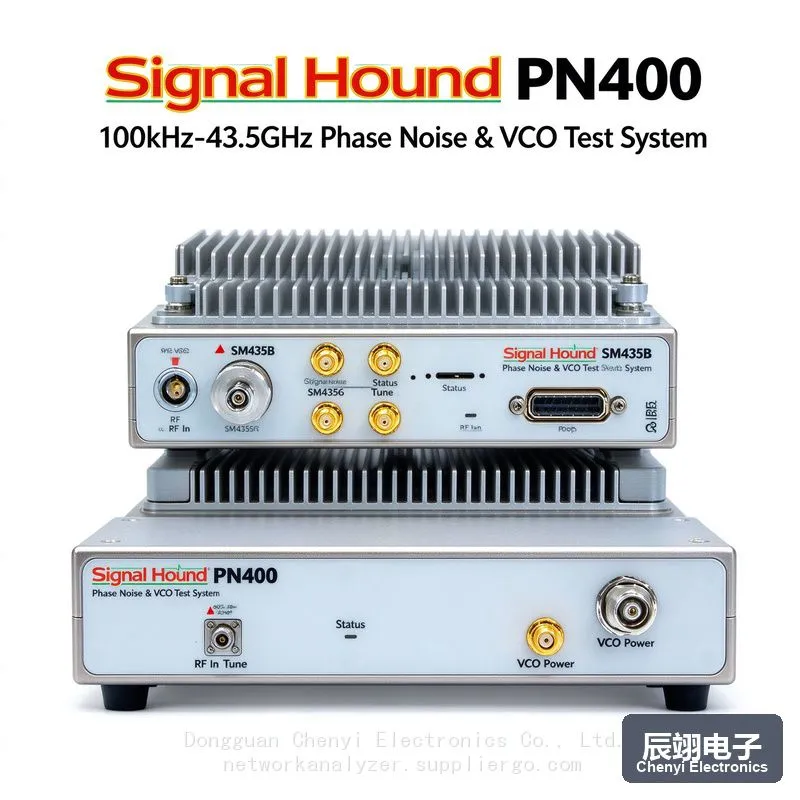
The Signal Hound PN400 is a phase-noise / VCO test system built from two SM Series signal analyzers using cross-correlation — two independent receiver channels each measure the same DUT, and the two phase-noise traces are cross-averaged. Only the noise that is uncorrelated between the two channels gets averaged away; the DUT's real phase noise, plus any interference common to both channels, is preserved. If the floor won't come down, it almost always comes down to this mathematical precondition being violated, or to convergence time being insufficient:
Too few correlation averages: slow convergence is a property of cross-correlation, not a fault — every doubling of the number of correlations buys only about 3 dB of floor improvement. Going from "single-unit floor" towards the promised 20–30 dB improvement takes hundreds to thousands of correlation iterations and minutes to tens of minutes of measurement time. If the production program has been set to a "fast sweep", what you see is an unconverged half-finished curve;
Common-mode interference between the two channels goes unrecognised: if the two SMs share supply, 10 MHz reference or ground paths that carry common-mode noise, that noise exists "in both channels", so cross-correlation does not remove it — it retains it as if it were DUT phase noise, and can even emphasise it. The signature is a floor that won't drop plus spikes at fixed offset frequencies on the trace;
Unequal split / unbalanced links: unequal cable lengths or losses from the power splitter to the two channels, i.e. too large an amplitude difference between channels, drives one side into compression first and correlation efficiency collapses;
DUT output itself too high: both channels get compressed by the strong signal at once, the distortion products are correlated, and the trace jitters wildly;
Correlation settings in the software never really applied: correlation mode not actually enabled, or only one channel acquiring (if the other channel fails silently, cross-correlation degrades into plain single-channel averaging) — check whether both live per-channel traces are still updating.
Troubleshooting and fixes
Watch the convergence process: step the number of correlations up (100 → 400 → 1600) and record how the floor falls with time — normally each doubling should give roughly 3 dB. Only if there is no reduction at all do you move on to the items below;
Measure the system first: replace the DUT port with a high-stability reference (or perform the loop-through / terminated checks described in the manual, see the commissioning piece) to confirm that cross-correlation can push the system floor into the range stated in the manual. Only then go measure the DUT;
Three-step common-mode check: run the two channels' supplies through isolation / different outlets separately; confirm the 10 MHz reference is genuinely common-source and of adequate quality; disconnect the DUT, terminate each channel input with a 50 Ω load and run cross-correlation — the terminated trace should fall smoothly down to the residual floor, and any spike marks a common-mode injection point;
Symmetrise the links: use equal-length, equal-type cables for both paths, measure and log the amplitude difference between the two splitter outputs, then compensate it in software or fold it into the budget; add suitable attenuation at the DUT output so both channels stay in their linear region;
Verify the software side: confirm cross-correlation mode is on and both channel status bits are healthy; if anything looks off, capture logs and have support decide whether this is "single-channel failure causing correlation degradation" or simply a configuration problem.
Acceptance criteria
Cross-correlated terminated floor reaches the residual level stated in the manual for the nominal configuration; repeated measurements of a known low-phase-noise reference source are reproducible (two runs under identical parameters agree within ≤1 dB at the 10 kHz-class offsets); the number of correlations and measurement duration used in the production program have been characterised by a convergence test and frozen.
(Compiled from Signal Hound's official PN400 product page / release material (dual-SM cross-correlation, floor 20–30 dB below a single unit) together with general cross-correlated phase-noise measurement principles; specific residual-floor values are subject to the actual pairing configuration and the datasheet shipped with the unit.)

Recently Posted
-
Signal Hound PN400 Oscillator Measurement 5dB Discrepancy; -5 dBm Higher SNR Setting Degrades Result supplier
November 26, 2026Signal Hound PN400 phase noise and VCO tester supplierTwo engineers measure the same oscillator 5 dB apart on the Signal Hound PN4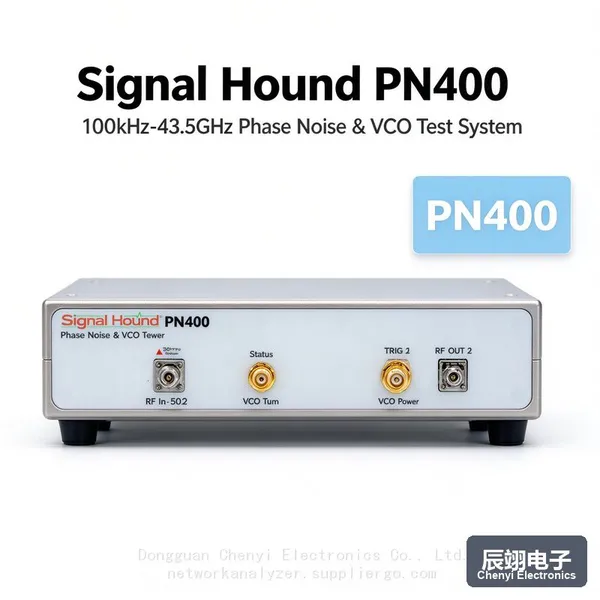 Read More
-
Signal Hound PN400 supplier:Advertised floor -160 dBc/Hz, but my measurement flattens at -142
November 26, 2026Signal Hound PN400 phase noise and VCO tester supplierAdvertised floor -160 dBc/Hz, but my measurement flattens at -142 — what the Read More
-
Signal Hound PN400 Incoming Inspection Only Verified Power-Up; All Readings Drifted After Three Months,supplier
November 26, 2026Signal Hound PN400 phase noise and VCO tester supplierIncoming inspection only proved the Signal Hound PN400 "powers on" Read More
-
Signal Hound PN400 supplier: Moving Comb Spikes on Phase Noise Trace on Standard Lab Bench
November 26, 2026Signal Hound PN400 phase noise and VCO tester supplierWith the Signal Hound PN400 on an ordinary lab bench, the phase-noise trace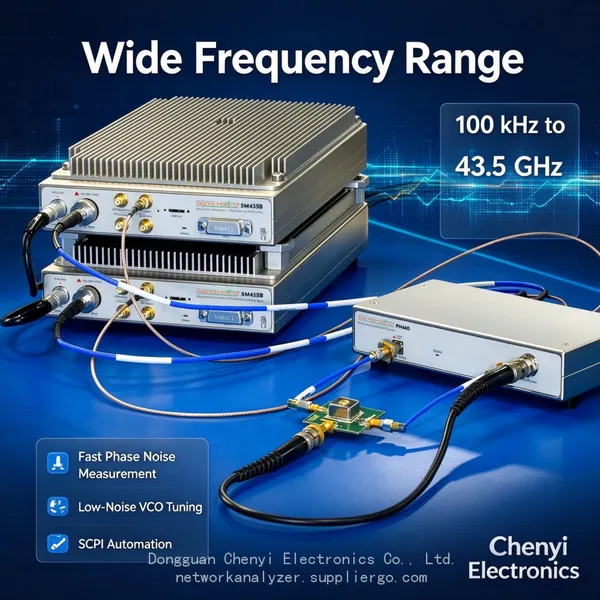 Read More

Contact Us
Recommended Products
-
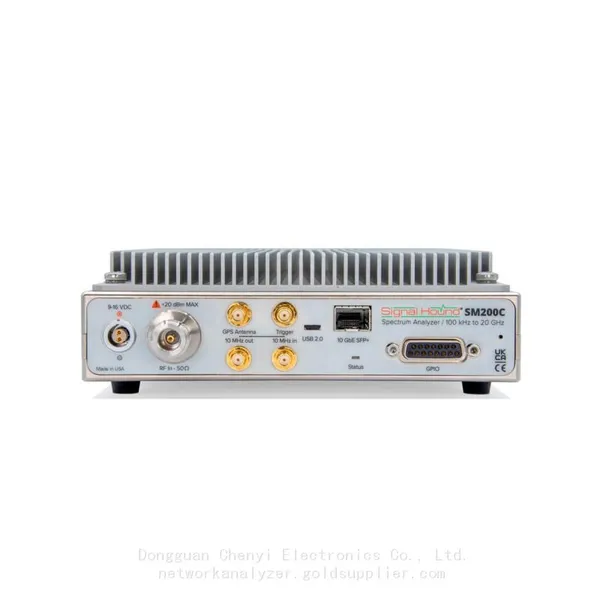
 Signal Hound SM200C 100 KHz to 20 GHz Real-time Spectrum Analyzer With 10GbE Monitoring ReceiversNegotiableMOQ: 1 Unit
-
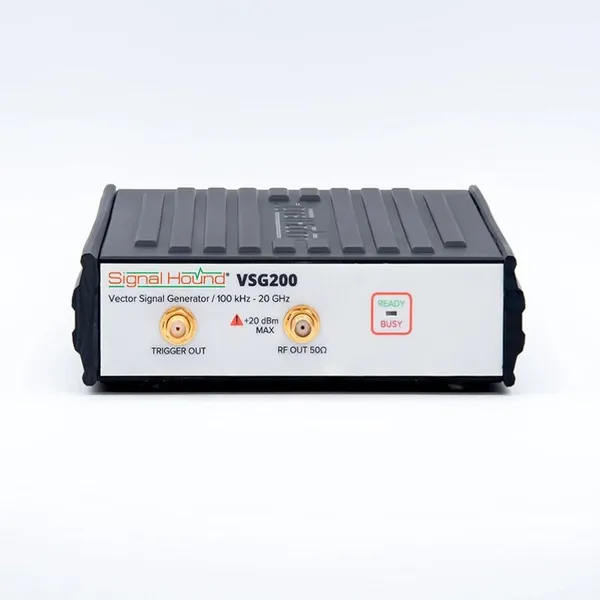
Signal Hound VSG200 Vector Signal Generator 100 KHz to 20 GHzNegotiableMOQ: 1 Unit
-
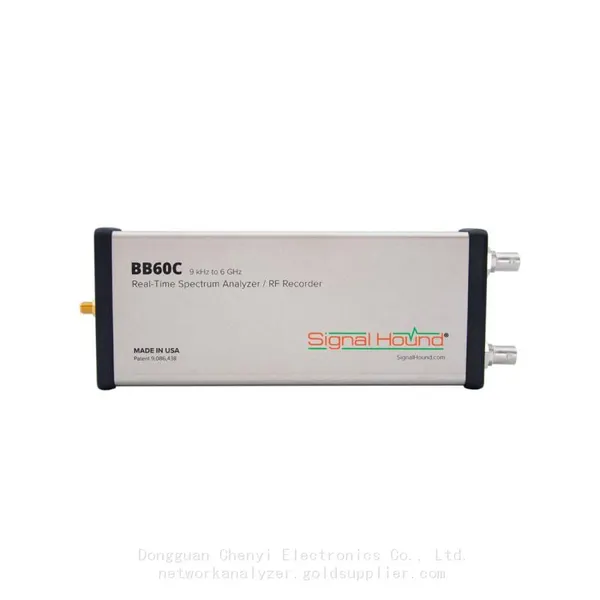
Signal Hound BB60C 9 KHz to 6 GHz Real-time Spectrum AnalyzerNegotiableMOQ: 1 Unit
-
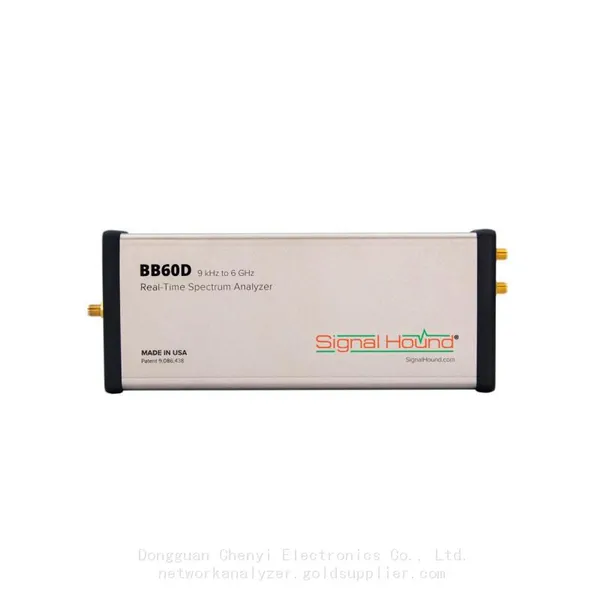
Signal Hound BB60D 9 KHz to 6 GHz Real-time Spectrum AnalyzerNegotiableMOQ: 1 Unit
-
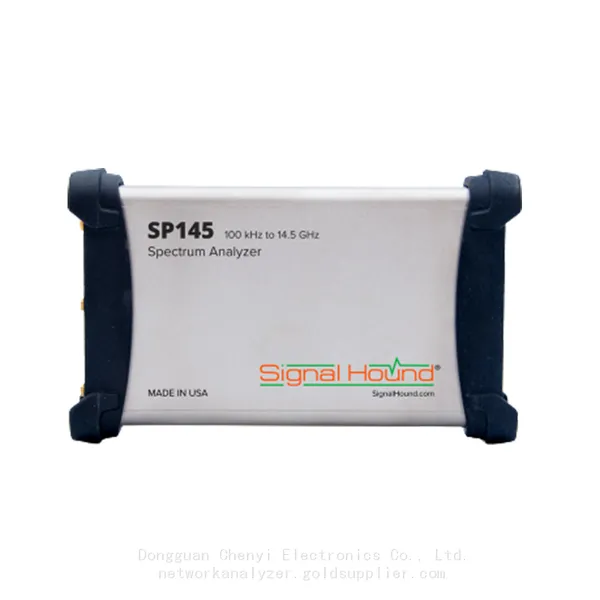
Signal Hound SP145 100 KHz to 14.5 GHz Real-time Spectrum Analyzer Monitoring ReceiversNegotiableMOQ: 1 Unit
-
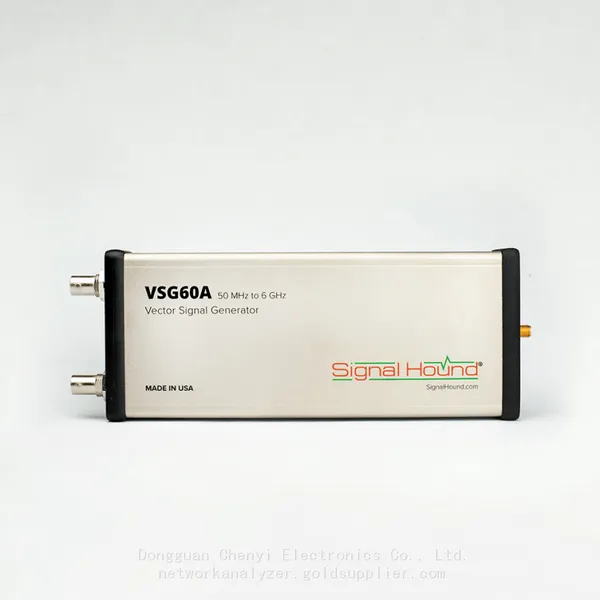
Signal Hound VSG60A 50 MHz to 6 GHz GHz Vector Signal GeneratorNegotiableMOQ: 1 Unit
-
Signal Hound VSG25A 100 MHz to 2.5 GHz Vector Signal GeneratorNegotiableMOQ: 1 Unit
-
Signal Hound VNA400 40 MHz to 40 GHz 2-port Vector Network AnalyzerNegotiableMOQ: 1 Unit
-
Signal Hound PCR4200 100 KHz to 20 GHz Four-Channel Phase Coherent ReceiverNegotiableMOQ: 1 Unit
-
Signal Hound TG124A 100 KHz to 12.4 GHz Tracking GeneratorNegotiableMOQ: 1 Unit
-
Signal Hound TG44A 10 Hz to 4.4 GHz t Tracking GeneratorNegotiableMOQ: 1 Unit
-
Signal Hound SA124B 100 KHz to 12.4 GHz Spectrum AnalyzerNegotiableMOQ: 1 Unit
-
Signal Hound SA44B 1 Hz to 4.4 GHz Spectrum AnalyzerNegotiableMOQ: 1 Unit
-
SM200B Real‑time Spectrum Analyzer,USB3.0 RTSA,100kHz-20GHz,calibrated I/Q Capture for 5G Test & Interference HuntingNegotiableMOQ: 1 Unit
-
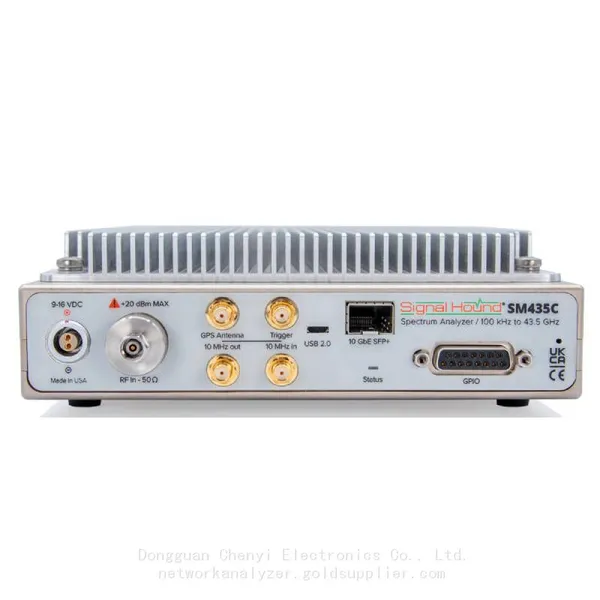
Signal Hound SM435C 100 KHz to 43.5GHz Real-time Spectrum Analyzer With 10GbE Monitoring ReceiversNegotiableMOQ: 1 Unit
-
Signal Hound SM435B 100 KHz to 43.5GHz Real-time Spectrum Analyzer Monitoring ReceiversNegotiableMOQ: 1 Unit
-
Signal Hound PN400 Phase Noise and VCO Test System 100 KHz to 43.5 GHzNegotiableMOQ: 1 Unit
-
Keysight E4980A Precision LCR Meter 20 Hz to 2 MHzNegotiableMOQ: 1 Unit
-
Keysight E4980B and E4980BL Precision LCR Meter 20 Hz to 2 MHzNegotiableMOQ: 1 Unit
-
Keysight U1733C Handheld LCR Meter 100Hz 120Hz 1kHz 10kHz 100kHzNegotiableMOQ: 1 Unit