
 Business License

The datasheet says the Signal Hound PN400 covers 43.5 GHz, so why does mine go "out of range" at 24 GHz?supplier
Signal Hound PN400 phase noise and VCO tester supplier
The datasheet says the Signal Hound PN400 covers 43.5 GHz, so why does mine go "out of range" at 24 GHz? — which SM you pair is which band you own
Symptom
A satellite / mm-wave R&D lab saw the marketing line "PN400 phase noise and VCO test system, 100 kHz to 43.5 GHz" and placed the order (or agreed a bundle with a distributor). After delivery they try to measure a K-band 24 GHz VCO and the software reports out-of-range / offers no such frequency point. A colleague on the same system measures 18 GHz with no problem at all. The complaint: "the frequency spec is inflated".
Root-cause analysis
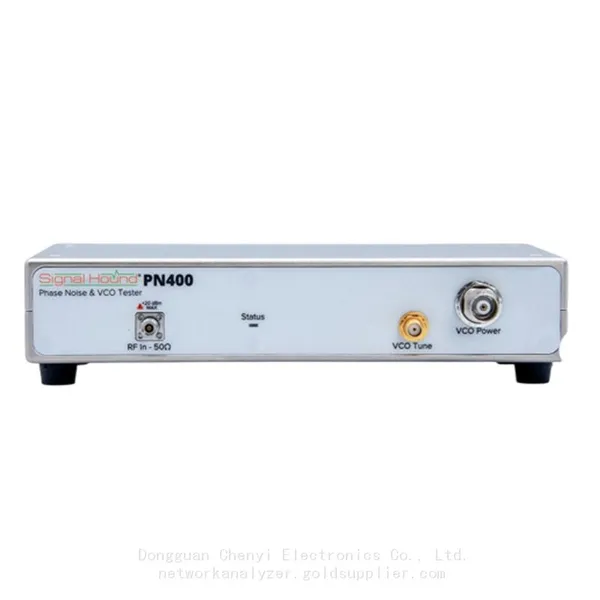
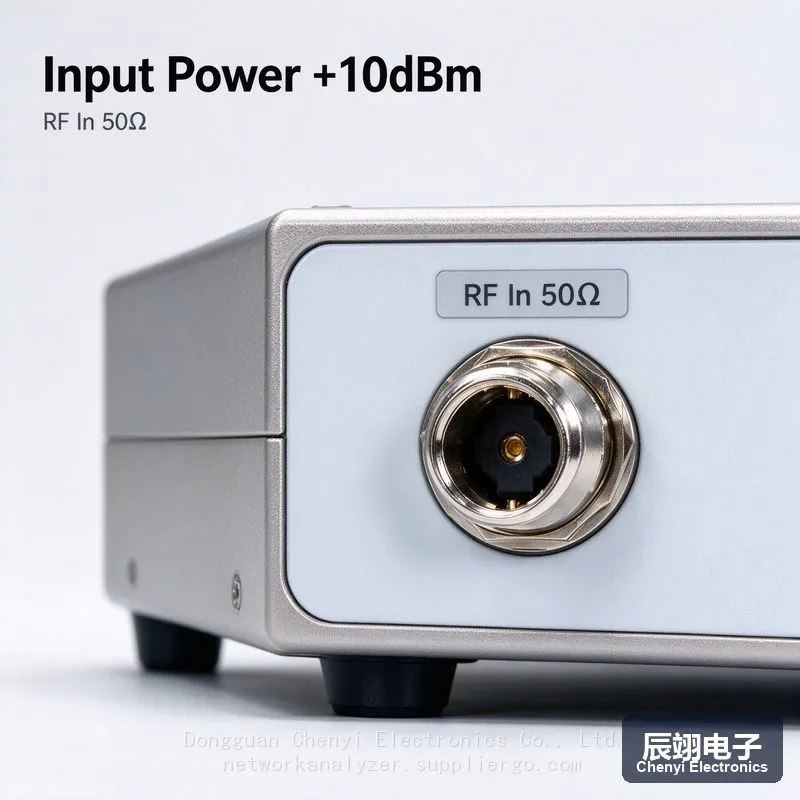
The essence of the Signal Hound PN400 is "two Signal Hound SM Series signal analyzers combined into a phase-noise / VCO test system" (stated explicitly in the official release material): the input frequency range depends on which SM models are paired —
Paired with the SM200 series: coverage up to 20 GHz (roughly the 1 MHz–20 GHz class);
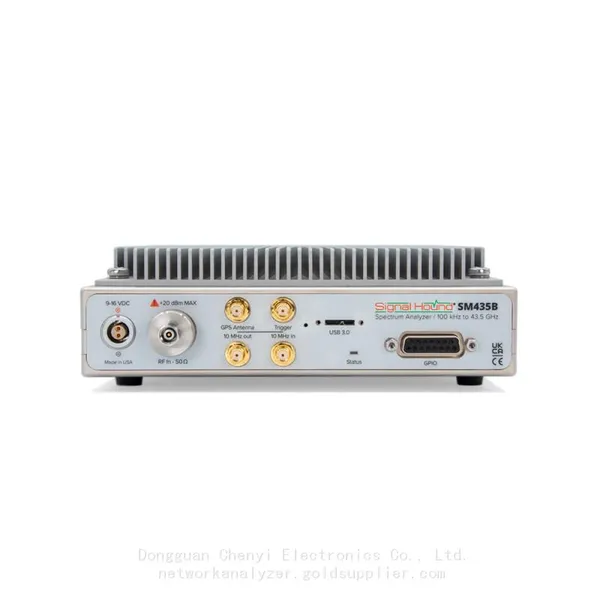
Only when paired with the SM435 series: coverage up to 43.5 GHz (the 1 MHz–43.5 GHz class).
The official press-release wording is exactly "input frequency range of 1 MHz to 20 GHz or 43.5 GHz (depending on pairing of SM series)". Four recurring misunderstandings:
Reading only the big "43.5 GHz" number: the headline figure for the product family comes from the top-tier combination; the purchase was made at the lower configuration while acceptance was judged against the higher one;
Re-using an old lab SM: someone owns an SM200B and wants to add a PN400 front end to "upgrade to a 43.5 GHz system" — if the pairing relationship doesn't match, coverage does not change;
Second-hand / shuffled combinations: the "PN400 system" that changed hands contains two SMs whose models don't match the original order, so real coverage follows the weakest link;
Hidden differences beyond the band ceiling: the 43.5 GHz configuration (SM435-based) differs from the 20 GHz configuration in offset range, residual noise floor and price; marketing pages mixing these together invites misjudgement.
Handling and prevention
Deciding what has actually arrived
Check the real pairing: confirm both SM model numbers from the software's device page and the nameplates on the chassis (SM200B/C versus SM435B/C), and cross-check three sources — the units, the order, and the packing list in the crate;
Confirm coverage: verify frequency points inside the range the system allows (response at 18 GHz but greyed-out at 24 GHz means an SM200-class pairing). Write "actual coverage of this system" into the equipment record so the next user doesn't have to guess;
Handling misunderstanding-type complaints: present the official "depending on pairing" wording plus the actual configuration sheet, and offer two paths — pay the difference to upgrade to an SM435 pairing, or keep the system for ≤20 GHz work and outsource or re-pair anything above 24 GHz.
Pre-sales wording (blocking the gap before it happens)
Quote on the principle "coverage = the ceiling of the SM pairing": e.g. "dual SM200C configuration → 20 GHz system; dual SM435C configuration → 43.5 GHz system", and mark the 43.5 GHz in the title as "top configuration";
Ask the customer three things: the highest frequency under test (decides the SM grade), how much offset range is needed (far-offset capability beyond 1 MHz+ differs between the two grades), and whether VCO Kv / tuning-voltage range testing is required (decides the DC bias configuration needs);
For labs that already own a single SM, state clearly that a PN400 needs two SMs of the same grade to form a cross-correlation system, and that "one old SM + one newly bought unit" requires confirming that firmware/versions can be paired.
Acceptance criteria
On arrival, immediately record and archive the system's actual coverage frequency (paired model numbers, upper frequency limit, software range); the customer signs the configuration confirmation sheet; in any dispute, the nameplate + order + software device page must agree across all three sources.
(Compiled from Signal Hound's official PN400 product page and release press release (frequency range depends on the SM series paired: 1 MHz–20 GHz or 43.5 GHz) and the SM Series model specifications.)
WhatsApp:+85268839563
Recently Posted
-
Cross‑correlation enabled on Signal Hound PN400; noise floor failed to drop 20 dB, trace grows noisier with averaging, cross‑correlation not convergin
November 26, 2026Signal Hound PN400 phase noise and VCO tester supplierI turned on cross-correlation in the Signal Hound PN400 but the floor didn&#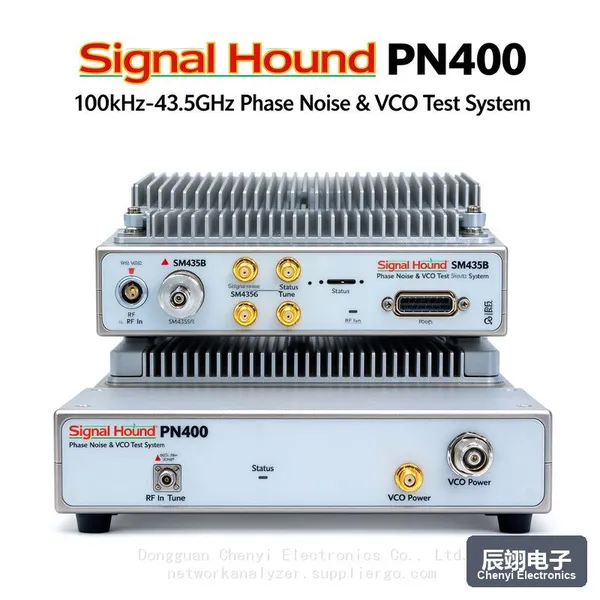 Read More
-
Signal Hound PN400 Oscillator Measurement 5dB Discrepancy; -5 dBm Higher SNR Setting Degrades Result supplier
November 26, 2026Signal Hound PN400 phase noise and VCO tester supplierTwo engineers measure the same oscillator 5 dB apart on the Signal Hound PN4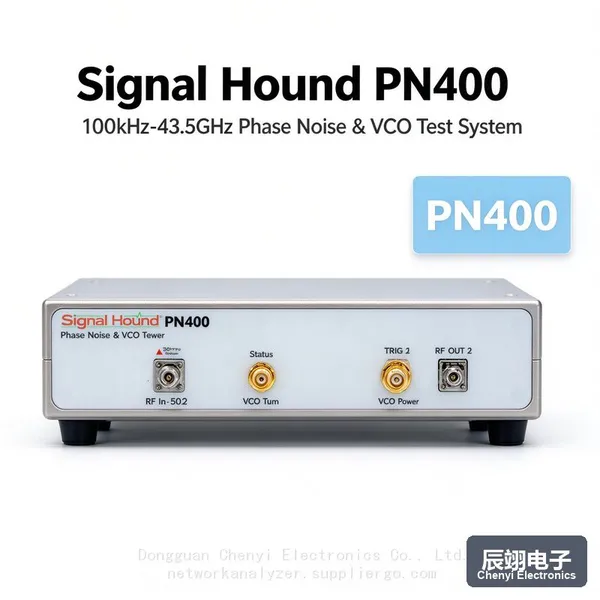 Read More
-
Signal Hound PN400 supplier:Advertised floor -160 dBc/Hz, but my measurement flattens at -142
November 26, 2026Signal Hound PN400 phase noise and VCO tester supplierAdvertised floor -160 dBc/Hz, but my measurement flattens at -142 — what the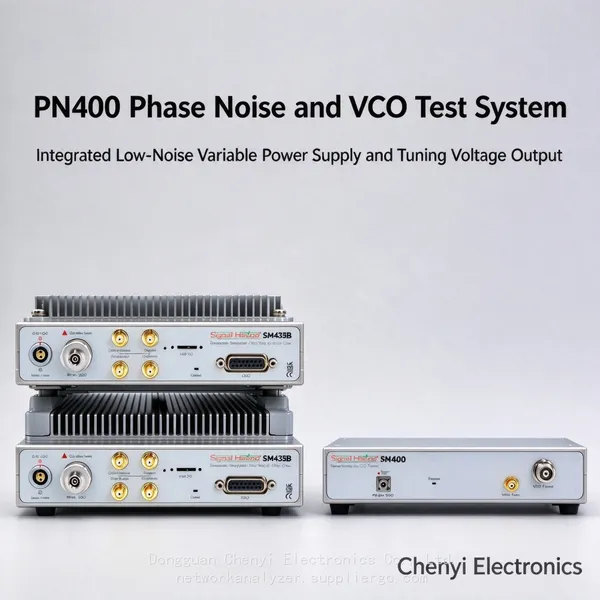 Read More
-
Signal Hound PN400 Incoming Inspection Only Verified Power-Up; All Readings Drifted After Three Months,supplier
November 26, 2026Signal Hound PN400 phase noise and VCO tester supplierIncoming inspection only proved the Signal Hound PN400 "powers on" Read More

Contact Us
Recommended Products
-
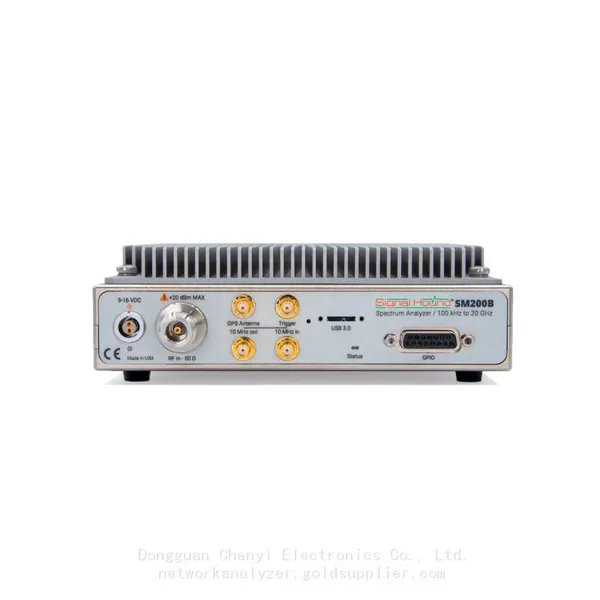
 Signal Hound SM200C 100 KHz to 20 GHz Real-time Spectrum Analyzer With 10GbE Monitoring ReceiversNegotiableMOQ: 1 Unit
-
Signal Hound VSG200 Vector Signal Generator 100 KHz to 20 GHzNegotiableMOQ: 1 Unit
-
Signal Hound BB60C 9 KHz to 6 GHz Real-time Spectrum AnalyzerNegotiableMOQ: 1 Unit
-
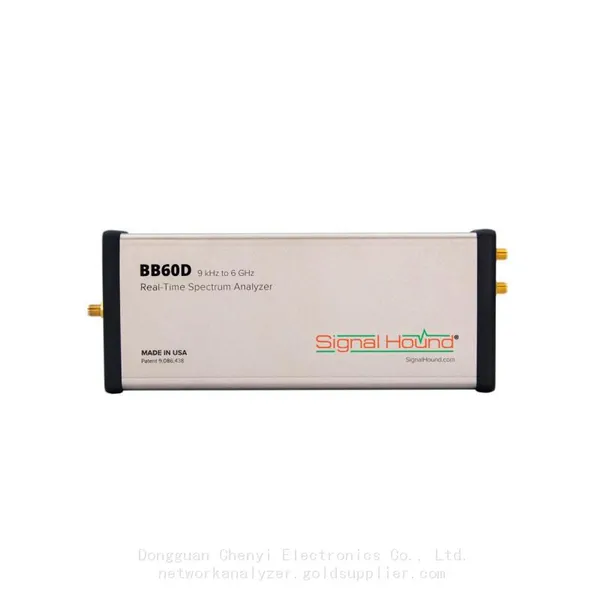
Signal Hound BB60D 9 KHz to 6 GHz Real-time Spectrum AnalyzerNegotiableMOQ: 1 Unit
-
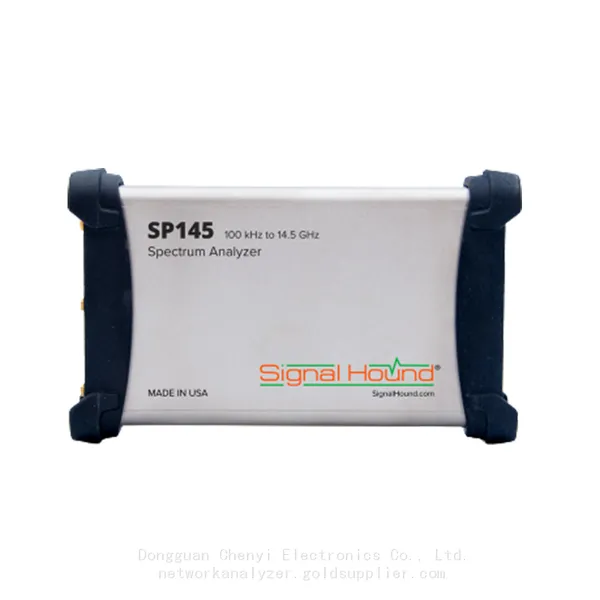
Signal Hound SP145 100 KHz to 14.5 GHz Real-time Spectrum Analyzer Monitoring ReceiversNegotiableMOQ: 1 Unit
-
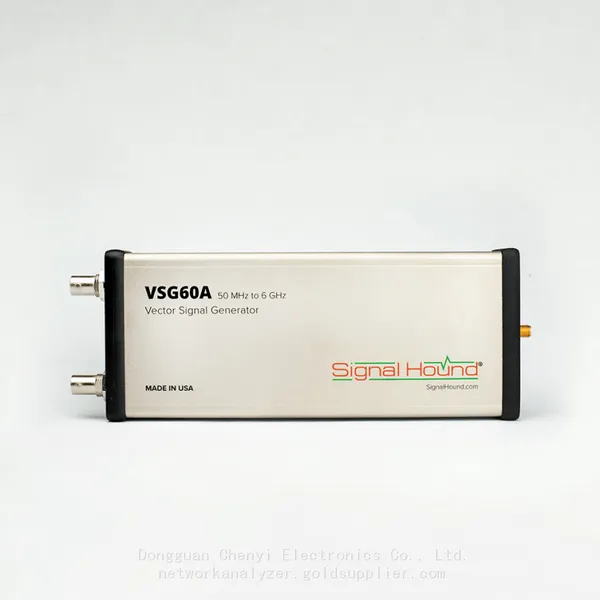
Signal Hound VSG60A 50 MHz to 6 GHz GHz Vector Signal GeneratorNegotiableMOQ: 1 Unit
-
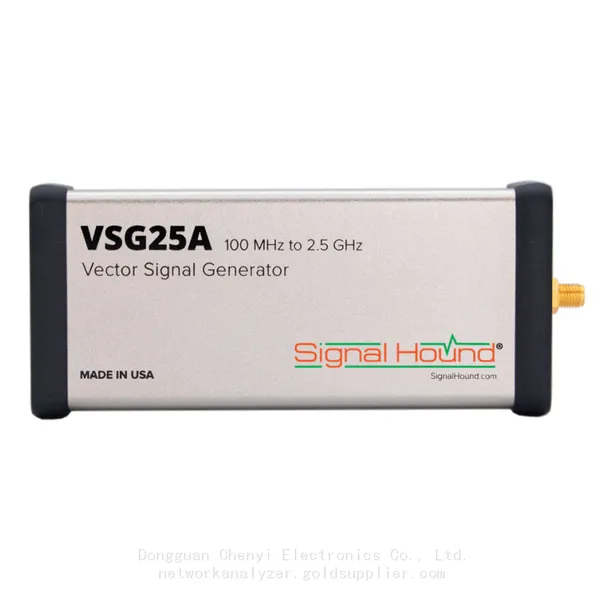
Signal Hound VSG25A 100 MHz to 2.5 GHz Vector Signal GeneratorNegotiableMOQ: 1 Unit
-
Signal Hound VNA400 40 MHz to 40 GHz 2-port Vector Network AnalyzerNegotiableMOQ: 1 Unit
-
Signal Hound PCR4200 100 KHz to 20 GHz Four-Channel Phase Coherent ReceiverNegotiableMOQ: 1 Unit
-
Signal Hound TG124A 100 KHz to 12.4 GHz Tracking GeneratorNegotiableMOQ: 1 Unit
-
Signal Hound TG44A 10 Hz to 4.4 GHz t Tracking GeneratorNegotiableMOQ: 1 Unit
-
Signal Hound SA124B 100 KHz to 12.4 GHz Spectrum AnalyzerNegotiableMOQ: 1 Unit
-
Signal Hound SA44B 1 Hz to 4.4 GHz Spectrum AnalyzerNegotiableMOQ: 1 Unit
-
SM200B Real‑time Spectrum Analyzer,USB3.0 RTSA,100kHz-20GHz,calibrated I/Q Capture for 5G Test & Interference HuntingNegotiableMOQ: 1 Unit
-
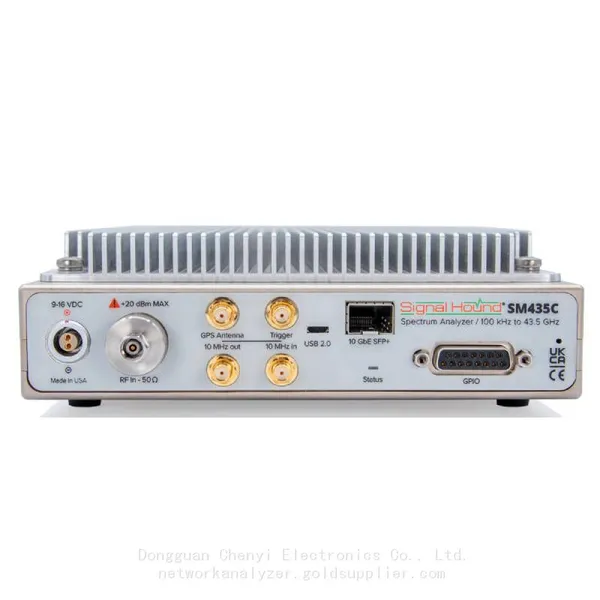
Signal Hound SM435C 100 KHz to 43.5GHz Real-time Spectrum Analyzer With 10GbE Monitoring ReceiversNegotiableMOQ: 1 Unit
-
Signal Hound SM435B 100 KHz to 43.5GHz Real-time Spectrum Analyzer Monitoring ReceiversNegotiableMOQ: 1 Unit
-
Signal Hound PN400 Phase Noise and VCO Test System 100 KHz to 43.5 GHzNegotiableMOQ: 1 Unit
-
Keysight E4980A Precision LCR Meter 20 Hz to 2 MHzNegotiableMOQ: 1 Unit
-
Keysight E4980B and E4980BL Precision LCR Meter 20 Hz to 2 MHzNegotiableMOQ: 1 Unit
-
Keysight U1733C Handheld LCR Meter 100Hz 120Hz 1kHz 10kHz 100kHzNegotiableMOQ: 1 Unit