
 Business License

Signal Hound PN400 Production Batch VCO Tests: Slower Than Manual, Data Drift Observed ,supplier
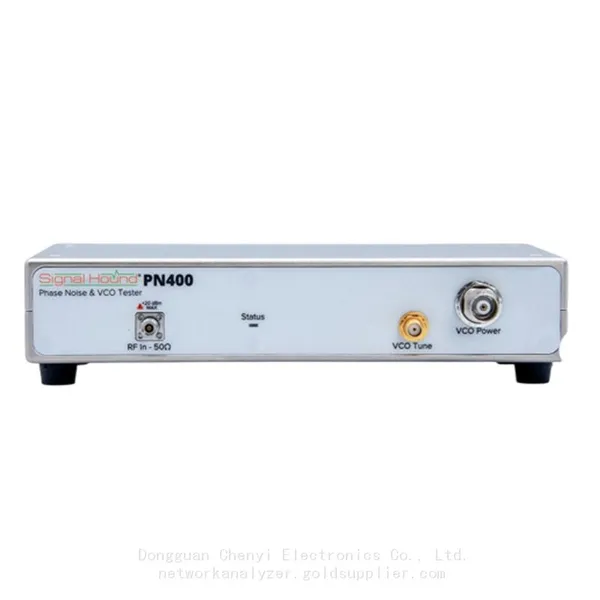
Signal Hound PN400 phase noise and VCO tester supplier
Running Signal Hound PN400 VCO tests in batch on the production line is slower than manual work and the data drifts — parameter engineering for fast-test mode
Symptom
An oscillator manufacturer puts the Signal Hound PN400 to work as production equipment, trusting the "fast VCO calibration / production-line test" claim, and it backfires: each unit takes 4–6 minutes, double what was planned; pass/fail judgement drifts, so something that passed yesterday fails today; after a fixture change of batch, occasional runs show "every single unit out of spec"; operators report "either we wait forever or the results wander".
Root-cause analysis
Production fast test and R&D precision test are two different parameter strategies. Porting an R&D template straight onto the line (or, conversely, squeezing precision-test parameters) will fail either way. The key variables in making the Signal Hound PN400 production-ready:
Correlation counts and the offset grid dominate cycle time: cross-correlation convergence counts, times number-of-offset-points × record length per point, set the takt. An R&D-grade "full configuration" (long records down to low frequencies plus thousands of correlations) means minutes on the line. The production template must be trimmed: pass/fail criteria usually watch only 3–5 critical offset points (for example 1k / 10k / 100k) rather than a full sweep;
Schedule Kv/FM measurement separately from phase-noise measurement: VCO production typically needs both Kv and phase noise; running them serially at full depth is inevitably slow. Build a decision tree by failure mode (quick Kv screen first to catch tuning anomalies, then grade with phase noise) instead of measuring every specification on every unit;
Fixture / contact consistency: repeated SMA mating wears contacts and spring-probe contact resistance changes, shifting the drive level systematically for every DUT. Production phase-noise testing is extremely sensitive to "the whole curve translating under identical settings", which is really an interface condition problem;
Line EMI and vibration environment: motors, variable-frequency drives and pneumatic valves are dense on a production floor, so the cleanliness engineering from the vibration / power-line piece has to be done in reinforced form on the line — otherwise judgement thresholds get relaxed and yield figures become fiction;
Changeover and version management: after switching DUT part numbers, bias ranges, power-step settings and limit tables fall out of sync, producing false "everything fails" incidents. SM firmware / software upgrades without regression break continuity of historical data.
Cycle-time engineering and stability measures
Two-tier template regime: an R&D tier (down to 10 Hz low offsets / full correlation counts, used for reports) plus a production tier (critical offset points, correlation count set to its lower bound by a convergence experiment — derive the minimum count from requiring ≥3 dB margin to the limits). Both tiers version-controlled;
Decision-tree flow: visual inspection → quick bias/Kv test (seconds) → phase noise at key points (target<60 s) → grading. Send failures to the R&D tier for arbitration re-measurement so the line takt isn't killed by the occasional long test;
Fixture lifecycle: count connector mating cycles, periodically verify return loss with a VNA, and make probe/socket replacement a PM work order. At the start of each shift, check system state with the "golden sample" (a reference VCO with certificate);
SPC monitoring: chart the golden-sample measurement trend and lot mean/range on SPC control charts — systematic drift (curve translation) and environmental degradation (increasing dispersion) then surface a week early;
Environmental upgrade checklist: keep line equipment away from valve piping, isolate the DUT station, give the test window its own conditioned supply, add a small shielded enclosure where needed — justify the spend against rework and misjudgement cost.
Acceptance criteria
Production-tier takt is stable at ≤60 s per unit (per product definition), with convergence backed by experimental data showing ≥3 dB margin to the limits; golden-sample daily mean variation is under SPC control; the changeover checklist is executed 100% of the time.
(Compiled from the PN400's product positioning (fast VCO calibration / production-line test scenarios) together with general cycle-time engineering for production phase-noise test; parameters are to be set by actual convergence experiments.)

Recently Posted
-
Cross‑correlation enabled on Signal Hound PN400; noise floor failed to drop 20 dB, trace grows noisier with averaging, cross‑correlation not convergin
November 26, 2026Signal Hound PN400 phase noise and VCO tester supplierI turned on cross-correlation in the Signal Hound PN400 but the floor didn&# Read More
-
Signal Hound PN400 Oscillator Measurement 5dB Discrepancy; -5 dBm Higher SNR Setting Degrades Result supplier
November 26, 2026Signal Hound PN400 phase noise and VCO tester supplierTwo engineers measure the same oscillator 5 dB apart on the Signal Hound PN4 Read More
-
Signal Hound PN400 supplier:Advertised floor -160 dBc/Hz, but my measurement flattens at -142
November 26, 2026Signal Hound PN400 phase noise and VCO tester supplierAdvertised floor -160 dBc/Hz, but my measurement flattens at -142 — what the Read More
-
Signal Hound PN400 Incoming Inspection Only Verified Power-Up; All Readings Drifted After Three Months,supplier
November 26, 2026Signal Hound PN400 phase noise and VCO tester supplierIncoming inspection only proved the Signal Hound PN400 "powers on" Read More

Contact Us
Recommended Products
-
 Signal Hound SM200C 100 KHz to 20 GHz Real-time Spectrum Analyzer With 10GbE Monitoring ReceiversNegotiableMOQ: 1 Unit
-
Signal Hound VSG200 Vector Signal Generator 100 KHz to 20 GHzNegotiableMOQ: 1 Unit
-
Signal Hound BB60C 9 KHz to 6 GHz Real-time Spectrum AnalyzerNegotiableMOQ: 1 Unit
-
Signal Hound BB60D 9 KHz to 6 GHz Real-time Spectrum AnalyzerNegotiableMOQ: 1 Unit
-
Signal Hound SP145 100 KHz to 14.5 GHz Real-time Spectrum Analyzer Monitoring ReceiversNegotiableMOQ: 1 Unit
-
Signal Hound VSG60A 50 MHz to 6 GHz GHz Vector Signal GeneratorNegotiableMOQ: 1 Unit
-
Signal Hound VSG25A 100 MHz to 2.5 GHz Vector Signal GeneratorNegotiableMOQ: 1 Unit
-
Signal Hound VNA400 40 MHz to 40 GHz 2-port Vector Network AnalyzerNegotiableMOQ: 1 Unit
-
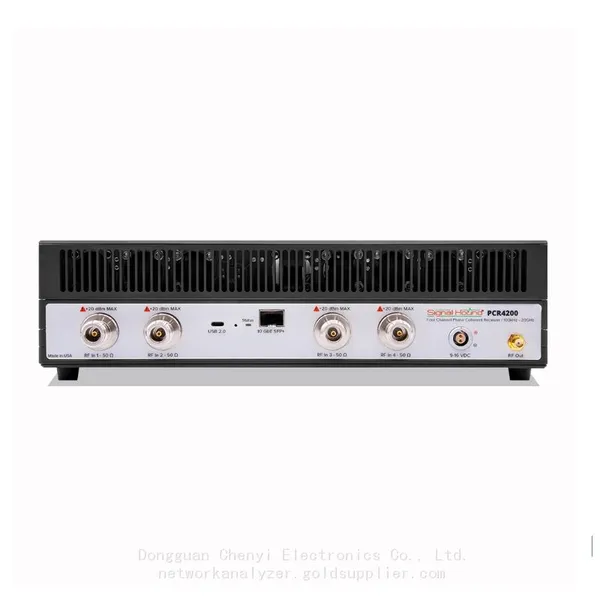
Signal Hound PCR4200 100 KHz to 20 GHz Four-Channel Phase Coherent ReceiverNegotiableMOQ: 1 Unit
-
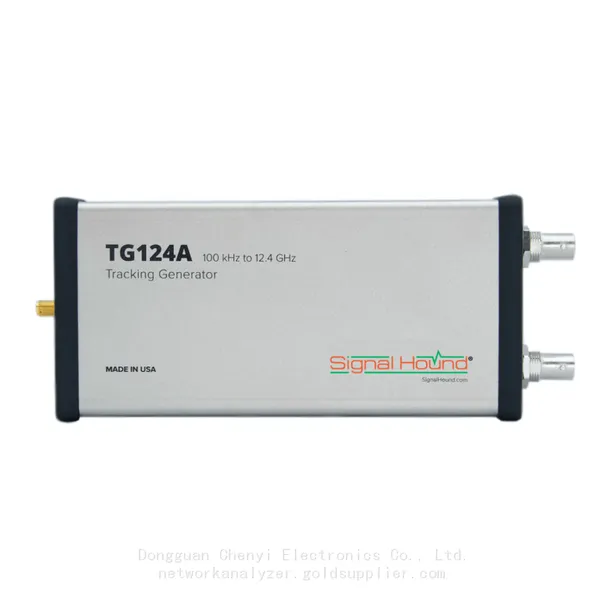
Signal Hound TG124A 100 KHz to 12.4 GHz Tracking GeneratorNegotiableMOQ: 1 Unit
-
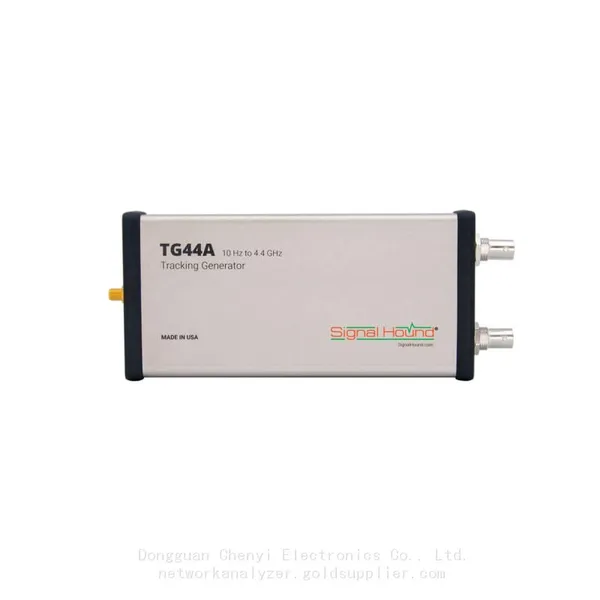
Signal Hound TG44A 10 Hz to 4.4 GHz t Tracking GeneratorNegotiableMOQ: 1 Unit
-
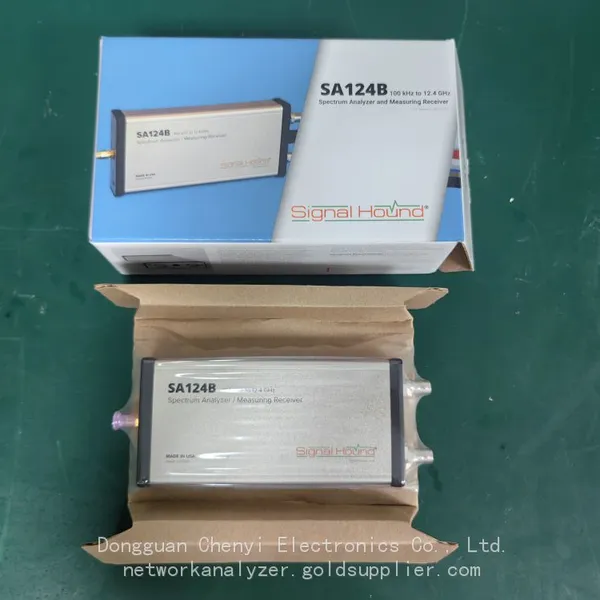
Signal Hound SA124B 100 KHz to 12.4 GHz Spectrum AnalyzerNegotiableMOQ: 1 Unit
-
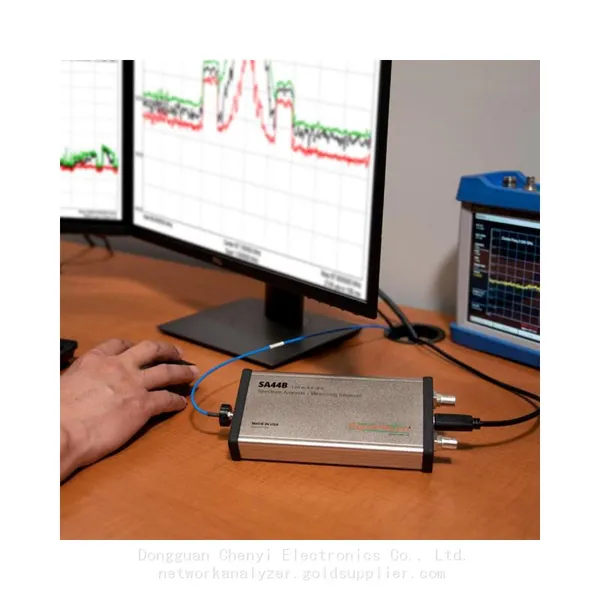
Signal Hound SA44B 1 Hz to 4.4 GHz Spectrum AnalyzerNegotiableMOQ: 1 Unit
-
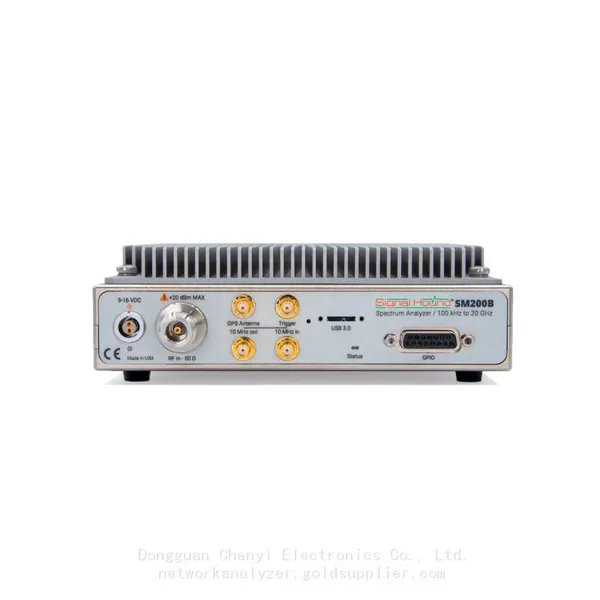
SM200B Real‑time Spectrum Analyzer,USB3.0 RTSA,100kHz-20GHz,calibrated I/Q Capture for 5G Test & Interference HuntingNegotiableMOQ: 1 Unit
-
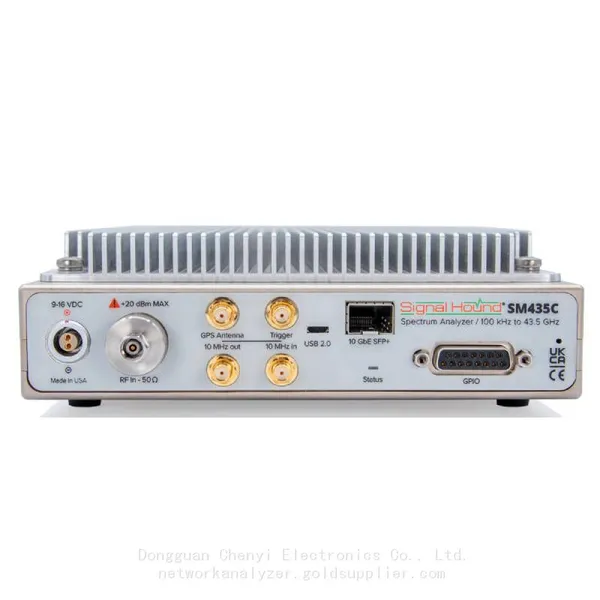
Signal Hound SM435C 100 KHz to 43.5GHz Real-time Spectrum Analyzer With 10GbE Monitoring ReceiversNegotiableMOQ: 1 Unit
-
Signal Hound SM435B 100 KHz to 43.5GHz Real-time Spectrum Analyzer Monitoring ReceiversNegotiableMOQ: 1 Unit
-
Signal Hound PN400 Phase Noise and VCO Test System 100 KHz to 43.5 GHzNegotiableMOQ: 1 Unit
-
Keysight E4980A Precision LCR Meter 20 Hz to 2 MHzNegotiableMOQ: 1 Unit
-
Keysight E4980B and E4980BL Precision LCR Meter 20 Hz to 2 MHzNegotiableMOQ: 1 Unit
-
Keysight U1733C Handheld LCR Meter 100Hz 120Hz 1kHz 10kHz 100kHzNegotiableMOQ: 1 Unit